Why Creators Move B2B Buyers Faster Than Your Own LinkedIn Page
Trusted practitioners convert B2B buyers faster than company pages through borrowed credibility.
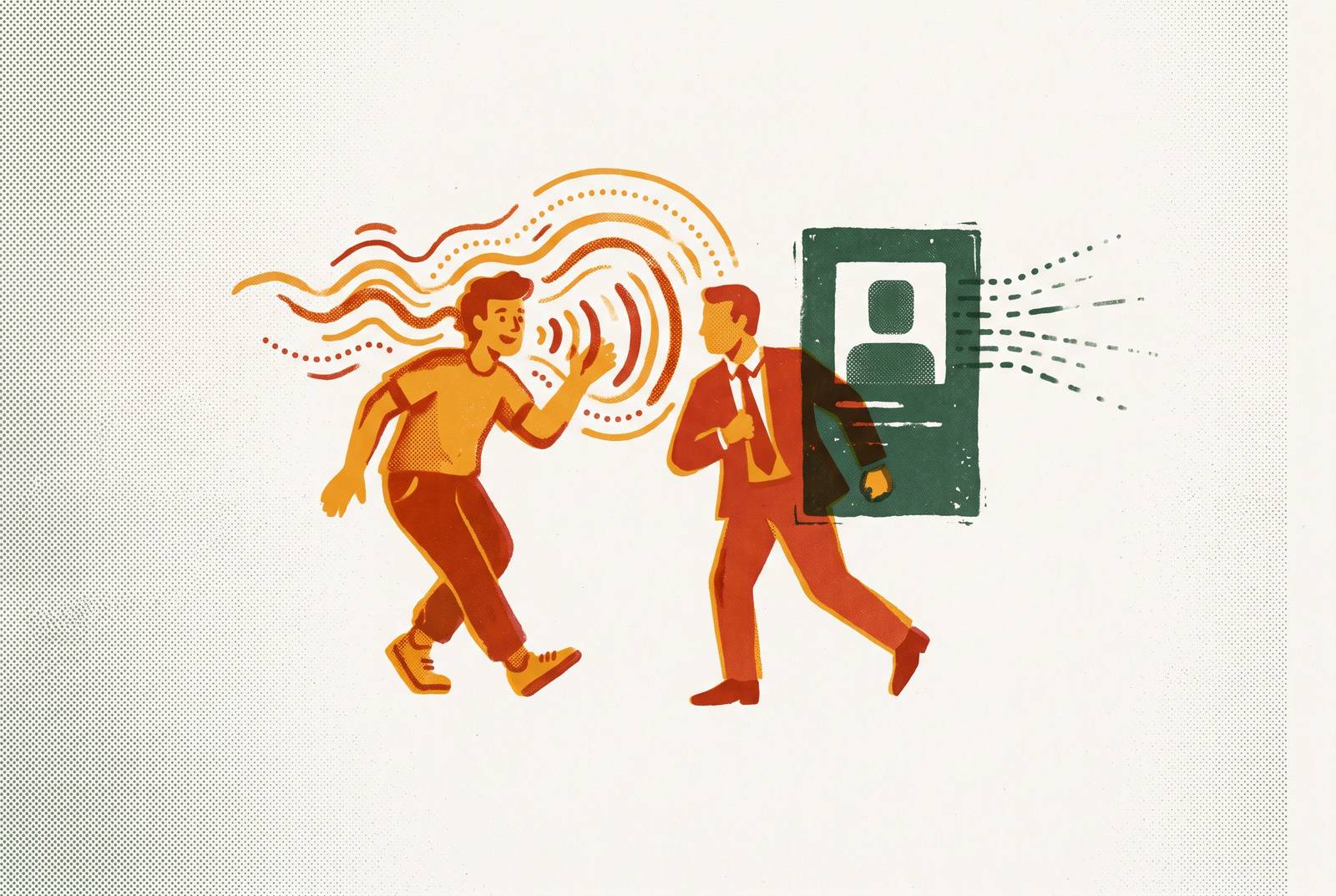
Creators can move B2B buyers faster than a company’s own LinkedIn page because they bring something the page cannot build by posting more. Buyers already trust them. A company broadcasts its claims, while a credible practitioner helps buyers believe those claims and act on them. That borrowed credibility makes creator content a demand generation channel.
Why B2B buyers on LinkedIn trust practitioners more than company pages
A brand page broadcasts into a feed and competes for reach. A practitioner earns ongoing attention from a professional community that chose to follow them. That choice changes how the message is received. A buyer following a niche SaaS operator has deliberately asked to hear that person’s thinking, while a company page impression may reach someone who liked a post years ago.
LinkedIn’s B2B creator research found that a large majority of buyers consume creator content on LinkedIn, more than on any other professional platform. An even larger share say it influences them. The people buyers watch include industry experts, analysts, business leaders, customers and employees. These are people with standing in a category.
That distinction reaches beyond what buyers like reading. LinkedIn’s research found that a meaningful share contact a salesperson in response to creator content, while a comparable share use it to justify pricing to internal stakeholders. The audience is not just watching from the sidelines. A trusted person’s explanation can become part of the buyer’s argument for taking the next step.
How trust arbitrage works through borrowed credibility
Trust arbitrage is the transfer of a practitioner’s existing credibility to a product they endorse or explain. The brand borrows some of the confidence the buyer has already placed in someone whose judgment they value. That confidence can help a product enter a shortlist, survive a pricing conversation or pass final validation.
The source of the trust is crucial. A company page is an interested party, so buyers judge its claims through their prior view of the company. More polished content does not remove that constraint. A practitioner’s credibility was formed independently, which gives their explanation a different starting point. The buyer has a reason to listen that predates the commercial message.
This does not mean an endorsement makes every claim believable. The mechanism depends on the person’s standing and on whether the product fits their expertise. A respected practitioner explaining a relevant use case puts the product into a context the audience already understands. A corporate script delivered by the same person weakens that connection. The commercial asset is their judgment.
Where in the buying cycle creator influence is strongest — and why that surprises most marketers
LinkedIn’s 2026 research found that a majority of B2B buyers depend on creator input at the final stage of buying. They are validating decisions. That puts creator influence precisely where buying committees are most cautious and where a deal can stall despite strong initial interest.
This challenges the common view that creators are an awareness channel. Their content also helps buyers keep up with their field, start sales conversations and defend pricing within their companies. But the final-stage finding changes the commercial argument. A practitioner’s view can help clear up doubts after the buyer already knows the product and has heard the sales pitch.
Creator influence can also unsettle an existing choice. Thought leadership can prompt buyers to investigate products they had not considered or reconsider a current vendor relationship. Its role is not confined to introducing unfamiliar names.
Last-click attribution misses much of this work. Trust built through months of reading may influence a final decision that gets credited to a demo request or sales call. The measurement frame therefore needs to include influenced pipeline and lead quality, rather than treating immediate conversions as the whole result.
Why niche experts outperform large creators in B2B — the engagement gap and what drives it
A smaller audience can be commercially stronger than a larger one if it contains more of the people who could buy. Creator content already earns engagement above what company pages achieve, and a niche expert’s audience can deepen that advantage. The useful distinction is relevant attention versus attention with little buying potential.
ICP density names that distinction. It is the proportion of a creator’s audience that matches the brand’s ideal customer profile. Higher engagement from a closely matched audience means more of the response comes from plausible buyers. Follower count cannot establish that fit, and a high aggregate engagement rate cannot substitute for it.
But does reach still help with awareness? Only when it reaches people the business needs to influence. An audience outside the target market can generate a lot of activity without helping build pipeline.
This makes niche practitioners more than a budget alternative to large creators. Many credible B2B voices have never had a paid sponsorship, so visibility in the sponsorship market is not a reliable measure of expertise. The selection principle is blunt. Audience overlap comes before audience size.
What documented campaigns show about creator-led pipeline in practice
Storylane invested substantially in LinkedIn creator marketing in 2024, working with sales creators including Tom Boston and Will Aitken. Its sponsored content combined product use cases with comedic short videos. The shorts accounted for roughly a third of sponsored posts but generated roughly two-thirds of total engagement. Format fit drove the response.
Notion used a different kind of participation. Dozens of creators changed their profile pictures simultaneously to a cryptic “LOADING…” image, then published custom Notion Faces posts around a New Year theme. The campaign also generated over 60 organic, unpaid posts from people outside the paid partnership group. The paid activity prompted others to join in.
Productive connected creator content more directly to demand generation. Its product launch used a managed creator program that generated documented pipeline and booked demos, with most of the pipeline attributed to paid amplification through Thought Leader Ads. Hopae’s program drew hundreds of thousands of LinkedIn impressions over four months, and by the end, inbound leads from named target companies were rising steadily.
These cases show different parts of the mechanism. Storylane demonstrates format fit, Notion shows earned participation, and Productive and Hopae connect distribution to commercial response. They are not interchangeable measures of success.
How Thought Leader Ads and LinkedIn’s creator infrastructure turn organic trust into paid performance
Thought Leader Ads use paid targeting to show a creator’s post to more people while keeping the person’s name on it. The format preserves the source of the message. Instead of turning the content into a brand-page asset, it lets the practitioner remain the visible voice as distribution expands beyond their organic audience.
Productive’s launch illustrates why that distinction is useful. Most of its documented pipeline came from Thought Leader Ads amplifying creator content. Paid media supplied distribution that the follower base could not provide by itself. The creator supplied the credibility that made the content different from a standard brand message.
LinkedIn launched Creator Marketplace on June 10, 2026, as a self-serve tool inside Campaign Manager for finding creators and working with them. LinkedIn also publicly announced BrandWorks that day, following its internal launch in March 2026 as a hands-on creative-services team. These tools bring more of the partnership process into the platform’s paid-media workflow.
That infrastructure changes how the channel can be run. Teams can make finding creators, working with them and amplifying their posts part of media planning. But the paid format does not erase the need for a credible original post. Targeting can extend an existing trust signal.
Why creator-led acquisition competes favorably with LinkedIn Ads on pipeline economics
Creator-led acquisition deserves comparison with direct brand advertising on cost per lead, influenced pipeline and deal quality. It is not only a brand exercise. The comparison is strongest for considered purchases where buyers need confidence before they can commit.
Click costs require careful handling. Creator posts promoted through Thought Leader Ads can cost much less per total click than brand-page ads. On a landing-page-click basis, however, Thought Leader Ads and brand-page ads cost nearly the same, and Thought Leader Ads may cost more depending on the objective. The budget case rests on what those clicks and the wider exposure contribute to qualified demand.
Complex sales give borrowed credibility more work to do. When buying takes a long time, involves a large committee and has high stakes, a practitioner can help ease doubts by explaining things over time. Brand advertising can spread claims, but it cannot build the same relationship a practitioner has earned on their own. Forrester expects most enterprise B2B companies to raise influencer-relations budgets in 2026, as more companies see the value of the channel.
For teams comparing budgets, the measurement discipline is to combine self-reported attribution, matched-market lift and influenced pipeline. Asking customers how they first heard of the brand captures a different part of the journey from recording the final conversion.
Selecting creators whose audiences match your buyers — the ICP-fit discipline
For teams building a program, deliberate audience research takes priority over a search for “top SaaS influencers. A creator can make excellent content and get strong engagement without reaching the right buyers. That is a selection failure. With ICP fit, the brand has useful trust to borrow.
Teams can begin with three to five creators whose audiences demonstrably overlap with the target customer. Their topics reveal what draws people in, while the seniority and function of commenters help show who is paying attention. A consistent point of view indicates what the audience expects from them. Past partnerships in related categories also help show whether the audience still trusts the creator after paid work.
The relationship should develop over several months before a commercial proposal. That gives the team a basis for co-created content rather than a transaction built around a single scripted post. The creator needs room to contribute the expertise that attracted the audience in the first place.
A partnership can also extend beyond feed content. Jess Ramos’s partnership offerings include social media content, conference attendance and live events, illustrating the range of work a practitioner can offer. The choice of format should follow the audience relationship. Buying a larger package does not compensate for buying access to the wrong people.
The operational layer that stops most B2B creator programs from scaling
Briefs, contracts, rights, payouts and reporting consume the time a team needs for finding and working with creators. Building discovery, vetting, contract management, brief review, creator ad activation and reporting in-house takes months of hiring and process development. Belief in the channel does not remove that workload.
For teams putting the process in place, rights belong in the first negotiation. Permission to run content as paid ads, embed it on landing pages and repurpose it for other channels should be secured before publication. Renegotiating after a post succeeds is more expensive. Prices also depend on the work, since the cost of sponsored posts varies widely and ongoing partnerships with niche experts usually use monthly retainers.
A shared Notion or Airtable workspace per creator, a standard brief with legally cleared claims and a monthly review tied to pipeline data can be enough. Dedicated tooling becomes more useful as the program grows. With its June 2026 introduction of payouts powered by a payment processor, LinkedIn removes one especially awkward step that teams had to do by hand.
The brief still demands restraint, even when the workflow becomes more formal. It should establish the commercial objective, the key claim and mandatory disclosures, then leave the creator room to speak naturally. Infrastructure exists to remove friction. A program that scales by scripting away the creator’s voice destroys the trust it paid to borrow.