B2B Creator-Led Growth vs Traditional LinkedIn Ads
Creator networks outperform paid ads on trust and conversion, not reach.

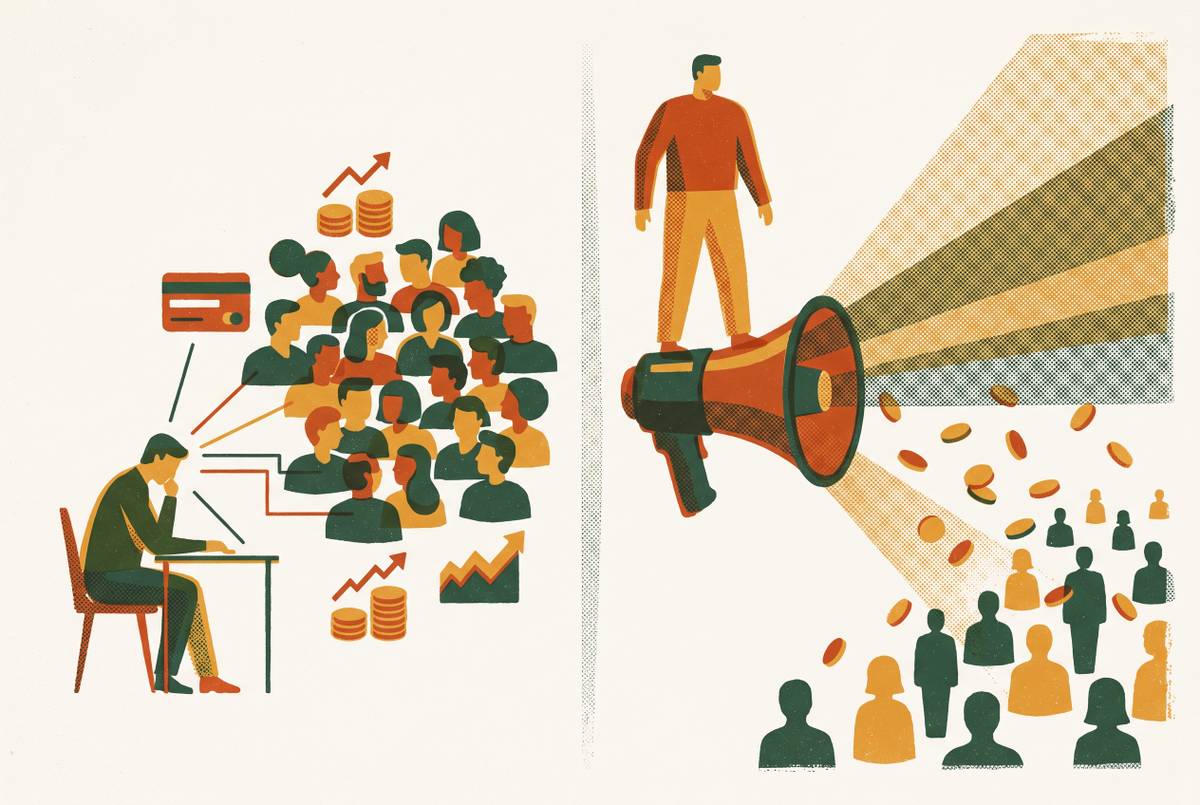
Most B2B marketing teams default to LinkedIn Ads for a simple reason: the motion is familiar. Set a budget, define an audience, launch, watch the dashboard. LinkedIn Ads put a brand message in front of a buyer. Creator content reaches that same buyer through a voice the buyer already trusts, and that difference changes how people move through the funnel, not just how many of them click at the top.
The gap appears in the numbers below. In LinkedIn's B2B creator research, most buyers said creator content directly shaped their decisions, and most said they'd rather read credible commentary from an industry voice than a brand's own content. Separately, the LinkedIn-Ipsos 2025 B2B Marketing Benchmark found that expert endorsements are more likely to tip a buyer toward one brand over a competitor than anything the company writes about itself, and getting named a top solution by analysts or industry experts ranked as the single most persuasive trust signal, ahead of video testimonials and ahead of written ones. None of this makes the case that LinkedIn Ads are a bad buy. It makes the case that splitting budget between these two channels without understanding how each one earns trust leads to the wrong mix.
LinkedIn Ads: mechanics and economics
LinkedIn Ads earn their keep through targeting. Job title, company size, seniority: no other platform matches LinkedIn's depth on these fields, and that precision is the actual product a marketer is buying. What it buys is impressions and clicks. It doesn't buy trust the buyer already had before the ad ran.
The cost picture backs this up. Metadata's 2026 benchmark, built on 2025 spend data, found the average B2B advertiser paying substantially more per click and per lead than most other performance channels, with the median cost per lead running well above the average and the most expensive tenth of advertisers paying several multiples of that median. That's a distribution that rewards sharp targeting and punishes anyone running broad, unfocused campaigns.
Even with those costs, LinkedIn stands out. The Dreamdata 2026 LinkedIn Ads Benchmarks Report, drawing on tens of millions of sessions and millions of B2B customer journeys, found LinkedIn is the only major ad platform delivering positive return on ad spend, and that return improved year over year through 2025. Held up against Meta Ads, LinkedIn's cost per lead runs higher, but those leads turn into sales opportunities at meaningfully better rates, so cost per qualified opportunity often ends up favoring LinkedIn despite the sticker shock on cost per lead.
There's a ceiling on what this channel can do, and it's structural rather than a matter of better copy or sharper audiences. LinkedIn Ads interrupt a buyer's feed; the buyer never opted in. The brand paid for the appearance, not for a relationship, and no amount of targeting precision changes how much trust that arrangement can transfer.
Creator-led growth on LinkedIn and its trust mechanism
Creator-led growth on LinkedIn has little in common with B2C influencer marketing. It means reaching buyers through practitioners those buyers already follow, whose take they've already decided is worth reading. The defining format here is what's often called the operator-creator: founders, VPs, and senior practitioners posting consistently about their actual work. They aren't full-time content people. Their day job is the credibility their audience showed up for.
Their reach looks small next to consumer influencers, often ranging from a few thousand to a few tens of thousands of followers, but that audience is packed with exactly the buyers a B2B brand wants. A SaaS founder writing about revenue operations isn't talking to a general crowd. He's talking to a buying committee.
That density is visible in engagement. Per LinkedIn data backed at Cannes Lions, niche B2B experts achieve engagement rates roughly triple those of macro creators on the platform: the smaller, denser audience outperforms the larger diffuse one. Buyer research has gone partly automated. Per 6sense data, the vast majority of B2B buyers used large language models in their buying journey, primarily to synthesize and organize research, so a creator's post shapes not only organic discovery but the AI-summarized answers buyers use to validate vendors.
Follower count is the wrong criterion for selecting B2B creators
Look across the 2025-2026 data on LinkedIn creator programs: the brands overspending on creators are the ones picking by follower count instead of audience makeup. They're buying reach. They should be buying relevance.
That's the opposite of how B2C influencer selection usually works. In B2B, a creator with a small, tightly concentrated audience made up almost entirely of the actual target buyer can beat a creator with many times the following whose audience is scattered across unrelated industries and roles. That comparison used to be a guess. It isn't anymore: the LinkedIn Creator Marketplace now shows audience breakdowns by job title and industry, a data layer consumer influencer platforms never had, and it's the reason LinkedIn's infrastructure works specifically well for B2B selection.
Beyond the audience data itself, check practical signals. A creator whose recent posts pull more comments than likes is sending a stronger signal than one who just racks up likes, since comments mean practitioners are actually arguing with the point, not scrolling past it. Relationship length matters too. The Stack Influence 2026 B2B influencer guide found that ongoing creator relationships produce more usable proof, more learning, and more measurable demand than one-off sponsored posts, because the audience has had time to connect the creator's judgment with the brand.
The obvious objection is that a bigger following should mean more impressions, but impressions delivered to an audience that doesn't contain your buyers are a brand awareness expense with no path to pipeline.
Creator-led growth's cost and lead quality advantage over LinkedIn Ads
Creator-led leads cost less and convert better than paid LinkedIn leads because the creator already did the work of earning the audience's interest before the brand ever showed up. Influencer Marketing Hub's 2025 B2B data found influencer-driven leads coming in meaningfully cheaper than PPC leads, with MQL-to-SQL conversion running higher because the creator had already worn down the buyer's skepticism before any lead form appeared.
The clearest evidence sits in LinkedIn's Thought Leader Ad format. Since June 2026, these ads can promote posts from real people, including people who don't work at the advertiser's company, and they cost dramatically less per click than standard single-image ads while pulling two to three times the engagement, because they read as an actual person's post rather than brand inventory. One cybersecurity company put this to the test directly: its CISO posted weekly commentary on security incidents, and once those posts were promoted as Thought Leader Ads, cost per click came in well below standard Sponsored Content, with leads generated at a fraction of the company's usual LinkedIn Ads cost. The trust built into the format changed the math.
The broader numbers back this up. Per the LinkedIn-Ipsos 2025 B2B Marketing Benchmark, brands running creator programs meaningfully outperform brands that don't, across engagement, awareness, revenue growth, and lead generation. And the TopRank-Ascend2 2026 State of B2B Thought Leadership Report found top-performing thought leadership marketers nearly four times as likely as their peers to report very high marketing ROI.
LinkedIn Ads' remaining advantages and creator-led growth's limits
None of this makes LinkedIn Ads the weaker channel across the board. Speed and control belong to paid: a campaign can reach a defined set of decision-makers within days, with no creator relationship to build, no brief to negotiate, no approval cycle to sit through. For campaigns targeting precise account lists, paid LinkedIn's targeting infrastructure is hard to replicate through creator selection, since a well-matched creator's audience overlaps with the account list rather than mapping onto it exactly. Paid also wins on retargeting at scale: once a creator post has gotten an audience's attention, following up with paid units aimed at that same group is a smart, efficient next step, and the two channels compound when sequenced that way.
Creator-led growth carries its own real limits, and they're operational rather than a sign the strategy is flawed. Sourcing the right creators, negotiating briefs, managing approvals, handling payouts, keeping several creators posting on schedule: all of that is real overhead, and it's the actual reason most B2B teams don't scale creator programs, not because they doubt it works. The ramp is also longer. A creator audience needs time to associate the brand with the creator's authority: the trust transfer is real but not instant, and that makes creator-led growth a worse fit for campaigns with a tight pipeline target.
Attribution compounds the problem. B2B sales cycles routinely stretch many months, per the Dreamdata 2026 LinkedIn Ads Benchmarks Report, and creator influence usually lands early, at the awareness stage, where a standard 30-day last-click attribution window simply won't catch it. Marketing teams relying on last-click models are structurally undercounting what creators contribute.
How LinkedIn's platform infrastructure supports both channels
LinkedIn has spent the past two years building infrastructure that connects creator content to paid distribution directly, and that shift makes the creator-versus-ads framing less of a clean either-or at the execution level, even though the underlying trust mechanisms stay distinct. The LinkedIn Creator Marketplace, announced June 10, 2026, sits inside Campaign Manager under a new Content and Assets section. Brands search for creators by topic or area of expertise, pull up creator cards showing follower counts, post volume, and engagement, then dig into audience breakdowns by job title, industry, and location, all without leaving the ad platform, and from there can promote a creator's posts as Thought Leader Ads or route video through BrandLink.
Thought Leader Ads are the structural bridge connecting the two. Since June 2026, brands can promote posts from people who don't work for them: a creator's organic post, negotiated and briefed on its own terms, can then run through LinkedIn's paid targeting engine, pairing creator trust with paid reach. BrandLink works a similar angle from a different format. Relaunched in May 2025 under a new name (it started as The Wire Program in June 2024), BrandLink connects brands with publishers and creators through pre-roll video placed directly in the feed, and LinkedIn-reported figures show BrandLink campaigns pulling higher average video completion rates than standard in-feed video, with exposed members more likely to submit a Lead Gen Form afterward.
Some of the friction has been engineered away too. LinkedIn added Stripe-powered payouts inside BrandLink in March 2026, closing off one of the more tedious barriers to running a creator program: paying creators without leaving the platform to do it. That same month brought BrandWorks, a managed team LinkedIn runs for select advertisers to handle creator strategy and creative, with SAP and Webflow among the first confirmed clients. The earlier Top Voices 360 program generated substantial revenue in its first year on a LinkedIn-disclosed figure, signaling that the platform sees creator monetization as long-term infrastructure investment rather than a feature experiment.
Measuring creator-led campaigns against paid LinkedIn's pipeline standards
Marketing teams don't hold back on creator budgets because they doubt the trust mechanism works. They hold back because they can't hand the CFO the same attribution table they'd produce for LinkedIn Ads, and that's a measurement problem with an actual solution. The IAB's Creator Economy Ad Spend and Strategy Report found a large share of creator ad buyers now ranking overall ROI as their top KPI, ahead of reach, showing the industry moving past vanity metrics toward something a finance team would recognize.
A two-part measurement approach has started to take hold. On the leading-indicator side, trackable within weeks, teams watch engagement from target accounts, how much content gets saved, whether executives are interacting with it, lift in branded search, and whether sales reps recognize a creator's name without being prompted. On the lagging side, tracked over a minimum of several months for enterprise deals, the measures are pipeline influence, how many people from a creator's audience turn up in the CRM within the attribution window, and revenue attribution wherever the sales cycle allows it.
That attribution window needs to be set honestly. Dreamdata's 2026 data puts the average B2B buyer journey well past a single quarter, so LinkedIn creator campaigns need at least several months of tracking before the numbers mean much, and even a generous window only captures part of what the creator actually influenced.