Niche Operator Creators vs. Broad-Audience Influencers for Fintech Sponsorships
Niche creators outperform broad influencers on fintech ROI through audience fit.
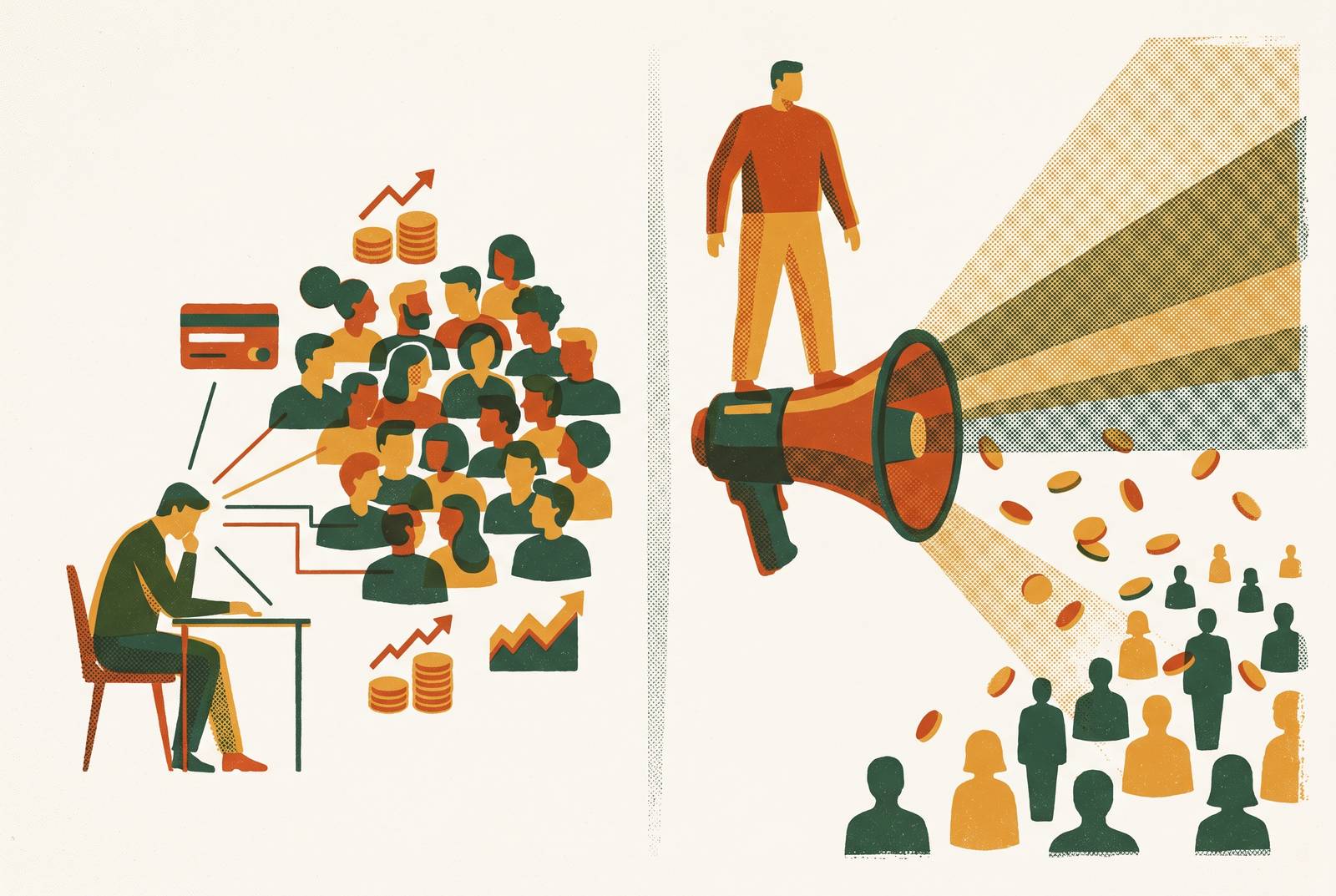
Fintech sponsorships work differently than sponsorships in almost any other B2B category: a creator with a small, tightly professional audience of CFOs, risk officers, or compliance leads beats a creator with a much bigger, mixed-bag following. The pricing data, the engagement data, and the ROI data all point the same direction. It's an audience-fit argument. It's an audience-fit argument, and in fintech, fit beats reach almost every time.
CFOs, treasury heads, and risk officers don't read marketing content the way a general audience does. They read it the way an auditor reads a footnote, hunting for the thing that's wrong. Purchasing decisions in this world carry regulatory weight, reputational weight, fiduciary weight, so trust is the ticket required just to get a meeting. It's the ticket required just to get a meeting. Edelman's Trust Barometer found 68% of B2B decision-makers trust a technical expert or peer over branded content from the company itself, and being named a top solution by analysts or industry experts ranked as the single most influential trust signal among buyers surveyed. Compliance also shrinks the pool of creators who can credibly speak to this audience in the first place, a structural scarcity rather than a temporary shortage. That's the gap any sponsorship strategy has to close, and picking the right creator type closes it, while picking the wrong one just spends against it.
What counts as a niche operator creator in fintech
A niche operator creator is a practitioner. Picture a former bank CTO writing about core banking modernization, a CFO-turned-creator covering working capital strategy, or a compliance officer breaking down new regulation for other compliance officers. Their audience is self-selected, made up of people working the same lane as the creator. It's self-selected, made up of people working the same lane as the creator.
A broad-audience influencer has a wide but mixed following instead: entrepreneurs, students, aspiring investors, general tech fans, all lumped together. The distinction has nothing to do with follower count. It comes down to who's actually reading and the creator's real standing with them.
LinkedIn's own commissioned Global B2B Marketing Outlook found 82% of B2B marketers believe creators strengthen credibility with decision-makers, and the mechanism behind that belief is earned association, not raw reach. A fintech practitioner with 300,000 followers is still a niche operator if that audience is packed with financial services professionals. A general entrepreneur creator with 40,000 followers is not a niche operator just because the number looks small. Get this distinction wrong and every downstream budget decision follows the wrong logic.
The engagement gap between practitioner audiences and general audiences on LinkedIn
Niche B2B experts average around 6% engagement, against roughly 1.9% for macro creators. The gap comes from self-selection: people showed up because the content is directly useful to their job, not because an algorithm dropped it in front of them once.
The pattern holds by follower tier too. Micro-influencers in the 10,000 to 100,000 range post an average engagement rate of 3.86%, versus 1.21% for mega-influencers above a million followers, and that gap keeps widening as audiences reward what reads as authentic over what reads as polished.
A human-versus-brand effect compounds this. Research from the Stanford Social Media Lab shows B2B audiences engage 2.8 times more with posts from individual employees than from company pages. The brand voice loses to the human voice, every time, and fintech marketers who keep routing budget through the company page are fighting a pattern the platform itself has already measured.
LinkedIn's algorithm has caught up to this. Richard van der Blom's study of 1.3 million posts found the platform now rewards a "Depth Score" built from dwell time, comment depth, saves, and private shares. A post with fewer likes but real saves and substantive comments outperforms a post with a pile of shallow likes in the next distribution cycle. A practitioner post that sparks a genuine argument about regulatory nuance in the comments is exactly the signal LinkedIn rewards, and that engagement pattern tends to appear right before an actual buying conversation.
Roughly 90% of B2B-relevant creators have never run a paid sponsorship. The most credible voices in most fintech sub-niches are, structurally, underpriced for what they deliver, and that won't last.
Why fintech audiences carry a price premium
In Margo Laz's dataset of roughly 200 B2B LinkedIn collaborations, fintech, banking, and crypto audiences price at £341 CPM, about three times the rate for marketing audiences (£122) or SaaS audiences (£126), even when follower counts look identical across creators. That premium isn't vanity pricing. Deal sizes in financial services run larger, the creator supply is narrower because of compliance, and a senior financial buyer is worth more per impression than a general reader.
The most expensive tier in Margo Laz's analysis wasn't the biggest one. It was the 250,000 to 500,000 follower band, averaging £2,178 per post. Past that range, audience quality dilutes and prices drop, down to £1,247 for accounts above 500,000 followers. Past a certain point, bigger is just bigger, and the pricing data already knows it even when marketers don't. It's just bigger, and the pricing data already knows it even when marketers don't.
The sweet spot for quality and price is in the mid-tier practitioner range, not at the top of the follower ladder. Favikon's dataset of 136 influencers found about 81% of B2B creators charge between $200 and $2,000 per post, and a single post at £2,178 reaching a concentrated group of actual fintech buyers can outperform several cheaper posts scattered across a diffuse general audience. A post reaching a few thousand CFOs moves more pipeline than a post reaching tens of thousands of people who'll never sign a purchase order. The math only works because fintech deal sizes justify the CPM. Try the same math in most other categories and it falls apart.
Where broad-audience influencers earn their place in a fintech campaign
Broad-audience influencers aren't dead weight in fintech. They have a real job at the top of the funnel: building brand familiarity, raising category awareness, reaching adjacent people who might quietly shape a purchase decision without being the one who signs off on it.
The LinkedIn-Ipsos B2B Marketing Benchmark found brands using influencer or creator marketing outperform non-users by up to 39% on engagement and awareness, and by 30% on revenue growth and lead generation. Those numbers blend niche and broad programs together, so they don't tell you which type did the heavy lifting, and that's exactly where marketers get the read wrong: they see the blended number and assume broad reach earned its share of it.
Broad influencers tend to fall short in fintech for three concrete reasons. Their audience is too diluted to reliably reach compliance officers, treasury teams, or risk professionals. Their own credibility in the fintech vertical is thin or nonexistent, so an endorsement from a generalist doesn't move the trust needle for a specialist buyer. And high reach inflates the impression count without improving conversion, which pushes cost per lead up because only a sliver of that reach is actually qualified.
Where broad influencers genuinely earn their spot: a fintech brand entering a brand-new market where category awareness has to exist before buyer intent can form, consumer-facing fintech products like payments apps or personal finance tools where the buyer really is a general audience, and amplification plays where a niche operator's post runs first to build credibility, then a broader voice extends that same message to warm prospects already circling the funnel.
Choosing a broad influencer because they're easier to find or faster to brief, rather than because they fit the buyer, doesn't save money. It just moves the cost downstream into a higher cost per lead.
How ROI diverges between the two approaches under proper attribution
B2B influencer campaigns have been credited with 5 to 11 times the return of traditional channels, and mature always-on programs have been reported to return around 420% at the 12-month mark, climbing as high as 20 to 1 when the creator genuinely matches the ideal customer profile. Fit drives that multiplier, not spend.
Split by creator size, the pattern holds. Micro-influencer campaigns commonly deliver 5x to 8x ROI when run well, while macro campaigns tend to run 3x to 5x. Influencer-driven leads also cost 20% to 30% less than PPC leads and convert from an initial qualified lead to a sales-ready lead 15% to 20% more often, because the creator has effectively pre-qualified the interest before the lead ever reaches sales.
Tracking impressions and engagement rate alone hides all of this. Fintech marketers need eyes on cost per lead, MQL-to-SQL conversion, and pipeline contribution to actually see where niche and broad programs diverge. The LinkedIn-Ipsos B2B Marketing Benchmark points to creator credibility as a decisive factor at later buying stages, so at the point where the deal actually closes, a creator's standing with that exact buyer role raises the odds of closing more than sheer reach does.
The TopRank-Ascend2 State of B2B Thought Leadership Report found top-performing thought leadership marketers are nearly 4 times more likely to report very high marketing ROI than their peers. Budget doesn't separate that top group from everyone else. Discipline about creator fit does.
The practical mechanics of identifying fintech creators with genuine audience fit
Follower count is the wrong first filter. Audience composition, job title, seniority, industry, is the right one. A creator with 15,000 followers who skew heavily toward financial services beats a creator with a much larger following spread across a dozen unrelated industries, every time.
Before committing budget, check a few credibility signals: has the creator actually worked in financial services, fintech, or an adjacent regulated industry, and does the writing sound like someone who lived the operational reality rather than read about it secondhand? Who's showing up in the comments, and are they practitioners debating the point rather than generic cheerleading? Does the creator offer analysis with an actual point of view, or just summarize news that anyone could rewrite?
LinkedIn launched its Creator Marketplace on June 10, 2026, folded into Campaign Manager, letting brands search for creators and review audience data directly on-platform. It's still in alpha, limited to certain advertisers and to creators in North America posting in English, and paired with Thought Leader Ads for amplification. BrandWorks, led by Alex Josephson, VP of BrandWorks, supports the broader B2B campaign layer; its predecessor, Top Voices 360, generated more than $20 million in revenue between May 2025 and May 2026, with clients including SAP, IBM, and ServiceNow.
Teams without alpha access, or who want a wider net across vetted practitioner communities, tend to do better with specialist B2B creator marketplaces that filter by audience fit and buyer profile rather than follower count. Naano is one platform built around exactly that kind of matching, pairing audience fit with pipeline attribution so a marketer can check whether a creator's premium price tag is actually translating into lead quality and deal velocity, the only number that justifies paying the premium.
Use engagement rate as a filter, never a final answer. Six percent engagement from a 15,000-follower fintech practitioner is worth more than 1.9% from a 200,000-follower general business creator, but the number alone won't tell you why, so check who's actually engaging before you commit. Keep that 90% figure in mind: most credible fintech voices have never run a sponsorship before. Finding them takes direct outreach, not scrolling a marketplace and waiting for a name to surface.
Campaign structure and format choices that amplify niche creator effectiveness on LinkedIn
Format should match how the creator's audience already trusts them. Niche practitioners whose followers value analytical depth do best in formats built to show that depth off: document carousels, which hold 3 to 10 minutes of average engagement time per viewer, and substantive text posts. Promotional video tends to undercut the specialist credibility that made the creator worth sponsoring in the first place, and that's a trade fintech brands make more often than they should.
Video isn't worthless here. It commands a 20% to 30% premium over text post rates and gets an algorithmic push from LinkedIn. That's the right call for founder or executive storytelling, and the wrong call when the goal is transferring real practitioner knowledge to a skeptical audience.
Platform engagement patterns confirm the same effect: dwell time, saves, comment depth, and private shares drive secondary distribution more than raw likes. A niche operator's post that kicks off a real professional debate travels further over time than a broad-reach post that racks up shallow reactions and disappears by the next morning.
Thought Leader Ads work well as an amplification layer on top of organic performance. Once a niche creator's post is already working, paying to push it to a targeted audience by job title or company size extends the reach without diluting the practitioner credibility that made it work.
There's a longer tail here too. A growing share of B2B buyers now use generative AI tools for vendor research, and LinkedIn's public content increasingly surfaces inside those AI-driven searches. Public creator content on LinkedIn can surface inside those AI-driven searches, which stretches a strong practitioner post's useful life well past its original posting window.
On briefing, resist the urge to over-script niche creators. Their whole value is an authentic voice, so the brief should hand them the problem and the audience insight, not exact language to repeat. And on cadence, that 420% return figure for mature always-on programs at 12 months should push fintech marketers toward sustained relationships with a small roster of trusted practitioners, rather than chasing a single post for a one-time spike.
A decision framework for fintech marketers choosing between niche operators and broad influencers
Three questions settle most of these calls before a budget line ever gets drafted.
Who's the actual buyer? If the honest answer is a CFO, risk officer, or compliance lead, a niche operator is the default choice, full stop. Broad reach doesn't fix a mismatch with the buyer's job title, no matter how good the creative looks.
What stage of the funnel is this campaign targeting? Late-funnel purchase influence, the stage where 56% of buyers lean on creators, demands real practitioner credibility. Early-stage category awareness leaves more room for broader reach, since the goal there is just getting the brand name into the room.
What's the deal size, and does it justify the CPM? Fintech's £341 CPM only makes sense against fintech's own contract values. A brand selling a low-cost tool to a broad small-business audience is playing a different game with different math, and forcing fintech-style niche pricing onto that game just burns budget for nothing.
Run those three questions honestly and the choice between a niche operator and a broad-audience influencer mostly makes itself. The pricing data, the engagement data, and the ROI data all say the same thing for fintech: audience fit is the variable that actually drives return, and reach without fit is an expensive way to generate impressions nobody who matters ever sees.