Micro vs Macro Creators for B2B LinkedIn Campaigns
ICP density matters more than follower count for B2B LinkedIn success.
Why ICP density changes the math
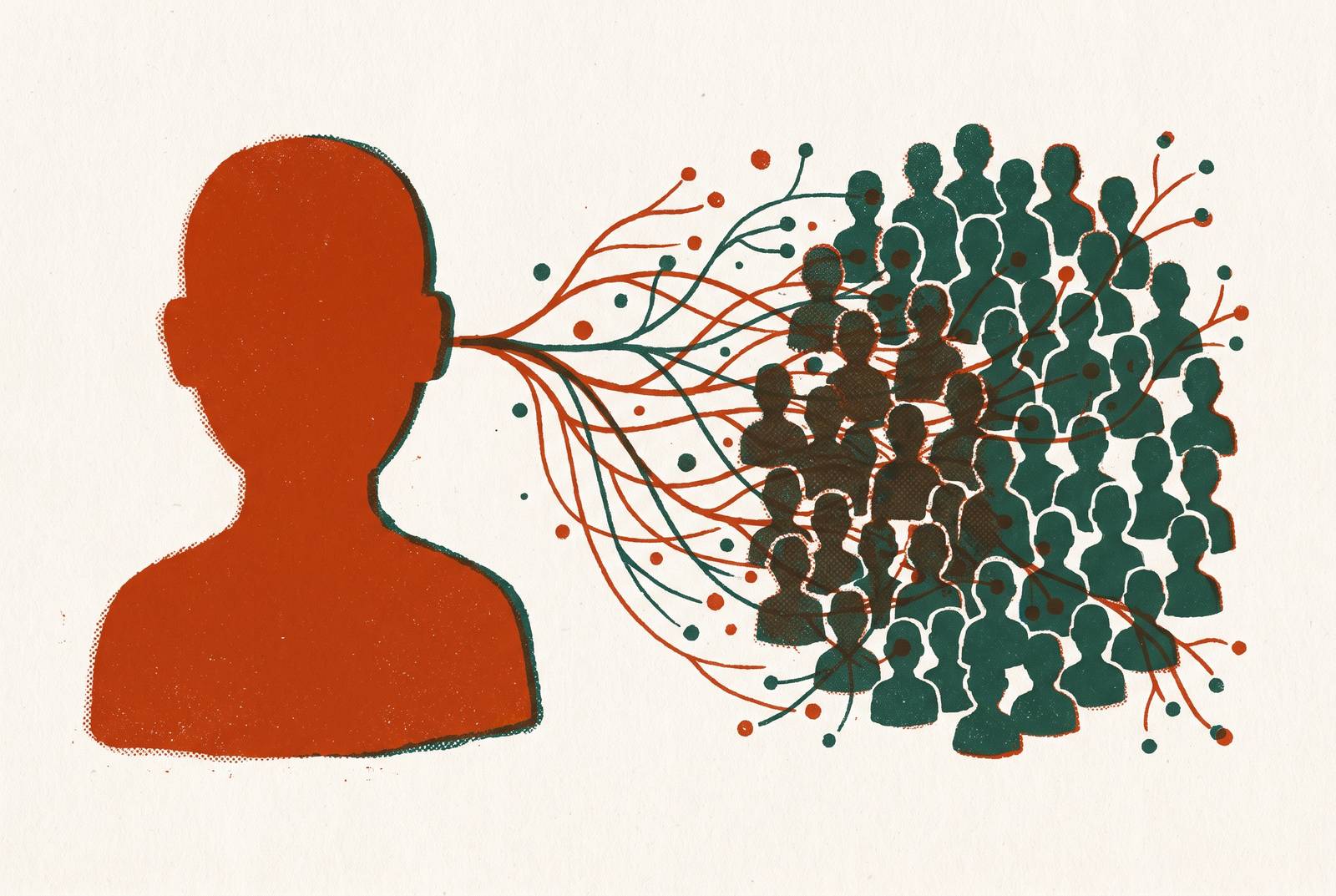
Forget nano, micro, macro, mega. That whole follower-count ladder from consumer influencer marketing falls apart the moment you bring it into B2B. The number that actually predicts pipeline is ICP density: the share of a creator's audience that matches your buyer profile by job title, seniority, industry, and company size. Once that number is on the table, picking between a small creator and a big one comes down to arithmetic rather than a gut call.
ICP density is a plain ratio. How many people in this creator's audience actually look like your buyer? A creator can have a massive following and a terrible ratio, or a tiny following and a great one. Follower count alone tells you nothing about which side of that line someone lands on.
LinkedIn happens to be the one major platform where you can check this ratio before you sign anything. Audience breakdowns by job title, industry, and company size sit right there at the point of creator selection. Buyers guess on other platforms. On LinkedIn, they can check, and that difference alone should have killed the follower-count model here, even if it's still limping along everywhere else.
Running the numbers makes the case. A creator with 4,000 connections, 60% of them fintech CTOs, delivers more qualified impressions to a fintech buyer than a generalist with 400,000 followers where maybe 0.5% fit that profile. Four hundred thousand sounds bigger. It isn't, once you filter for who's actually in the room.
Don't confuse ICP density with engagement rate, either. That mix-up burns more B2B influencer budget than any other single mistake in this category. A creator can pull heavy engagement from an audience that's wrong for the brand, or modest engagement from an audience that's exactly right. Engagement measures activity. ICP density measures relevance. A comment from a real buyer carries pipeline signal. A comment from an enthusiastic stranger with no purchase authority doesn't, no matter how many exclamation points it has.
A pricing opportunity here favors acting now, since the sharpest voices in narrow domains are sitting underpriced. Most brands still shop by follower count instead of audience makeup. The sharpest voices in narrow domains are sitting underpriced right now. Cross-reference creator shortlists against account-based marketing target lists while you're at it. If a creator already has engagement from contacts at a brand's tier-one accounts, that's intent data sitting in plain sight, free for anyone who bothers to look.
What micro-tier creators deliver in a B2B LinkedIn campaign
Micro creators on LinkedIn, roughly 10,000 to 100,000 followers, tend to build their following around one narrow lane: RevOps, data engineering, SaaS growth, whatever their thing is. Their followers are peers working the same problem, not fans collecting content, and that changes the texture of everything downstream.
Comments go into real detail. DMs come from people actually evaluating a purchase. Shares carry professional context attached. Micro-tier LinkedIn creators tend to post median engagement rates well above the platform-wide average, and the gap between micro and mega influencers on engagement runs wide enough that cost-per-post comparisons alone stop making sense.
Cost per engagement runs sharply lower for micro creators than macro, and niche creator campaigns convert email sign-ups at meaningfully higher rates than typical B2C benchmarks. Audience specificity is doing that work, not the creative.
Stacking a few of these together sharpens the case further. Several niche micro creators, each running $500 to $5,000 per post across different verticals, generate more total ICP-qualified impressions, more content assets, and more attribution data than one macro placement at the same total spend. This isn't a coin flip between one big bet and several small ones. Run correctly, the small bets win on the numbers that actually feed pipeline.
None of this comes free of overhead, and pretending otherwise sets teams up to fail. Micro creators are easier to brief and quicker to move, and most will iterate on a draft without a fight. But running five or six at once multiplies the coordination load fast unless a brand has a system built for it. One relationship is easy to manage by hand. A dozen run the same way turns into missed drafts and mismatched invoices within a month.
Macro creators' place in B2B campaigns
Macro creators aren't obsolete, and anyone arguing for micro-only budgets is overcorrecting. Macro creators, roughly 100,000 to a million followers, bring something micro creators structurally can't: category-level credibility. Their association with a brand tells the wider circle of analysts, journalists, and buyers that this is worth their attention, and that signal travels faster than any density calculation.
Scale still does real work for awareness. A 2% engagement rate on a huge audience still produces more total interactions than a strong percentage on a tiny one. When brand awareness is the actual goal, and it's the top-cited objective in B2B influencer marketing surveys, macro is the right tool for that job, not a consolation prize for brands who couldn't be bothered with density math.
Category launches make the case cleanest. When most of the buying market doesn't know a product category exists yet, one macro creator's post can compress months of slow discovery into a single moment, something ten micro creators working in parallel can't replicate no matter how well they're coordinated.
In B2B, the macro tier tends to be analysts, conference keynote speakers, and widely read industry authors, people whose credibility got built offline long before their LinkedIn following caught up to it. That history is the product being bought, ahead of the follower count on the rate card.
None of this is cheap, and none of it should get sold as a discount. Expect premium per-post fees on LinkedIn, longer approval cycles, more polished and less native-feeling content, and far less visibility into ICP density than a smaller creator offers. The density argument still applies at this tier too. A macro creator whose audience skews junior or generalist fails the pipeline test regardless of how impressive the rate card looks. Macro earns its spot only when the subject matter lines up tightly enough with the category that the broad audience naturally tilts toward real buyers anyway. That's a deliberate call for a specific funnel stage, made by choice, not by default.
Running the pipeline math before choosing a tier
The right first question is how many of this creator's followers actually match the ICP, and what it costs to reach each one. It's how many of this creator's followers actually match the ICP, and what it costs to reach each one.
The math takes two lines. Estimated ICP-matched followers equals total followers times estimated ICP density percentage. Cost per ICP impression equals the post fee divided by that ICP-matched follower count. Run those before comparing rate cards, since a nano creator charging $200 to $800 per post with 60% ICP density can beat a macro creator charging a premium rate with 5% density on cost per qualified impression. That's not close once the numbers sit side by side.
Niche B2B verticals like SaaS, RevOps, and enterprise procurement command a 40% to 80% pricing premium over general professional content creators, reflecting the market pricing in density rather than inflation. That premium is the market pricing in density, not inflation. Rates in this category have started converging into a $500 to $5,000 per-post band regardless of follower count, as long as the brief is B2B-oriented. Brands are paying for access to a specific type of decision-maker, not for a reach number, and pricing has already started reflecting that even where buyer instincts haven't caught up.
Repetition belongs in the math too. Teams running always-on influencer programs report their programs effective far more consistently than teams running one-off campaigns, by a wide enough margin that a single-post ROI calculation badly understates how much value compounds from repeated exposure over time.
Brands overpaying on LinkedIn right now are the ones still shopping by follower count instead of audience role composition. Pipeline math fixes that. It runs against the instinct most media buyers were trained on, but the instinct is what's wrong here, not the math.
What LinkedIn's creator infrastructure reveals about the direction of B2B influence
LinkedIn's own product roadmap backs up this argument, and that's a signal, not a coincidence. The platform is building creator monetization as infrastructure, not bolting it on as a feature. What launched as "The Wire Program" in June 2024 got rebranded and expanded as BrandLink in May 2025, then moved to self-serve inside Campaign Manager by March 2026. Creator Marketplace followed in June 2026, currently running as an invite-only, English-only alpha in North America.
BrandLink connects brands with publishers and creators through pre-roll video ads in the feed. LinkedIn's own performance data indicates BrandLink campaigns outperform standard in-feed video ads on completion rates, and members exposed to BrandLink show higher lead conversion rates after seeing a Lead Gen Form. The publisher network expanded in March 2026 to include Axel Springer, The CEO Magazine, NYSE, Reuters Japan, TIME, and Times Network.
Creator Marketplace returns follower counts, recent engagement, and, notably, audience breakdowns by job title, industry, and location. The marketplace surfaces creator profiles and audience data to help brands identify relevant matches. Payment and contract terms are handled outside the platform, flexible, but with no built-in scaffolding for teams trying to run this at volume.
Access isn't open to everyone. LinkedIn picks creators based on expertise, content quality, platform presence, and fit with advertiser demand, and eligible creators get invited through a Monetization tab in their account. The job-title and industry filter baked into Creator Marketplace works as a native ICP-density tool. LinkedIn built this whole argument directly into the product.
The budget flows confirm where things are heading. LinkedIn now captures 41% of total B2B ad spend, up two points year over year, while non-branded search dropped to 33% of spend in 2025, Dreamdata reports. Money is moving toward LinkedIn, and creator tooling is the platform's bet on capturing more of it.
A practical tier-selection framework for B2B LinkedIn campaigns
Start with the campaign goal, ahead of the creator's size. That single ordering prevents most of the bad decisions in this category.
Net-new awareness in a market that doesn't know the brand yet calls for macro creators whose subject matter tracks the category closely, because reach is the actual point and the lower ICP density is a fair trade for it. Demand generation, lead capture, demos, and trial sign-ups call for micro and nano creators with verified ICP density, and the cost-per-ICP-impression math needs to get run before anyone signs anything. Account-based motions call for cross-referencing shortlists against target account lists and prioritizing creators with visible engagement from tier-one contacts, regardless of what their follower count says about tier.
Audience verification comes before the deal, never after. Use LinkedIn's native audience breakdown, job title, industry, company size, as the primary filter. That's what the Creator Marketplace alpha exists to surface. For creators outside the marketplace, request audience screenshots or analytics exports directly. An unverified audience claim is an unverified claim, and it should get treated that way no matter how good the creator's content looks.
Portfolio construction beats single-creator bets more often than not. A spread of micro creators across verticals produces more attribution data, more content assets, and more ICP-qualified impressions than one macro placement at the same total spend. Always-on relationships compound on top of that: programs run continuously report effectiveness at rates far above campaign-based ones, which argues for ongoing relationships over one-off posts. Expert endorsements shift competitive perception more reliably than a company's own written content, and repeated exposure from a trusted domain voice is the mechanism behind that gap, not the creative itself.
Operations kill more B2B creator programs than bad creative or thin budget ever will. LinkedIn's Creator Marketplace leaves brands to manage briefs, usage rights, exclusivity terms, legal review, and payment, all by hand, all direct. Without some system built for that load, there's a hard ceiling on how many creator relationships one team can run at once. Teams that build the operational layer, brief templates, contract flow, payout processing, attribution tracking, are the ones actually running the portfolio strategies that hit the strongest reported return ranges in B2B influencer research. Attribution isn't optional. Clicks, leads, and pipeline dollars need to trace back to a specific post, or creator spend never gets evaluated on the same footing as any other acquisition channel.
On budget, the current LinkedIn rate landscape breaks down roughly like this. Nano creators, under 10,000 followers, run $200 to $800 per post for general professional content and $500 to $2,500 in niche B2B verticals. Micro creators, 10,000 to 100,000 followers, run $500 to $5,000 per post, with SaaS, RevOps, and enterprise procurement creators at the top of that range. Established mid-tier LinkedIn influencer programs run $3,000 to $15,000 per placement. The industry benchmark for LinkedIn B2B influencer ROI is $5.20 to $6.50 per dollar spent, and that's the floor any tier decision should get measured against, not the ceiling.
Sources
- Micro-influencers vs. macro-influencers: which drive ROI for B2B?
- LinkedIn influencer rates 2026: what B2B brands pay
- Types of influencers: nano, micro, macro, mega and the B2B LinkedInfluencer tier
- Macro vs Micro Influencers 2026: Winning Strategies - TANKE
- lindseygamble.com
- LinkedIn influencer marketing: a complete B2B playbook
- influencerfee.com
- digitalapplied.com