Pipeline Conversion Rates From LinkedIn Creator-Sourced Leads
Creator-sourced leads convert higher because trust is already established before sales contact.
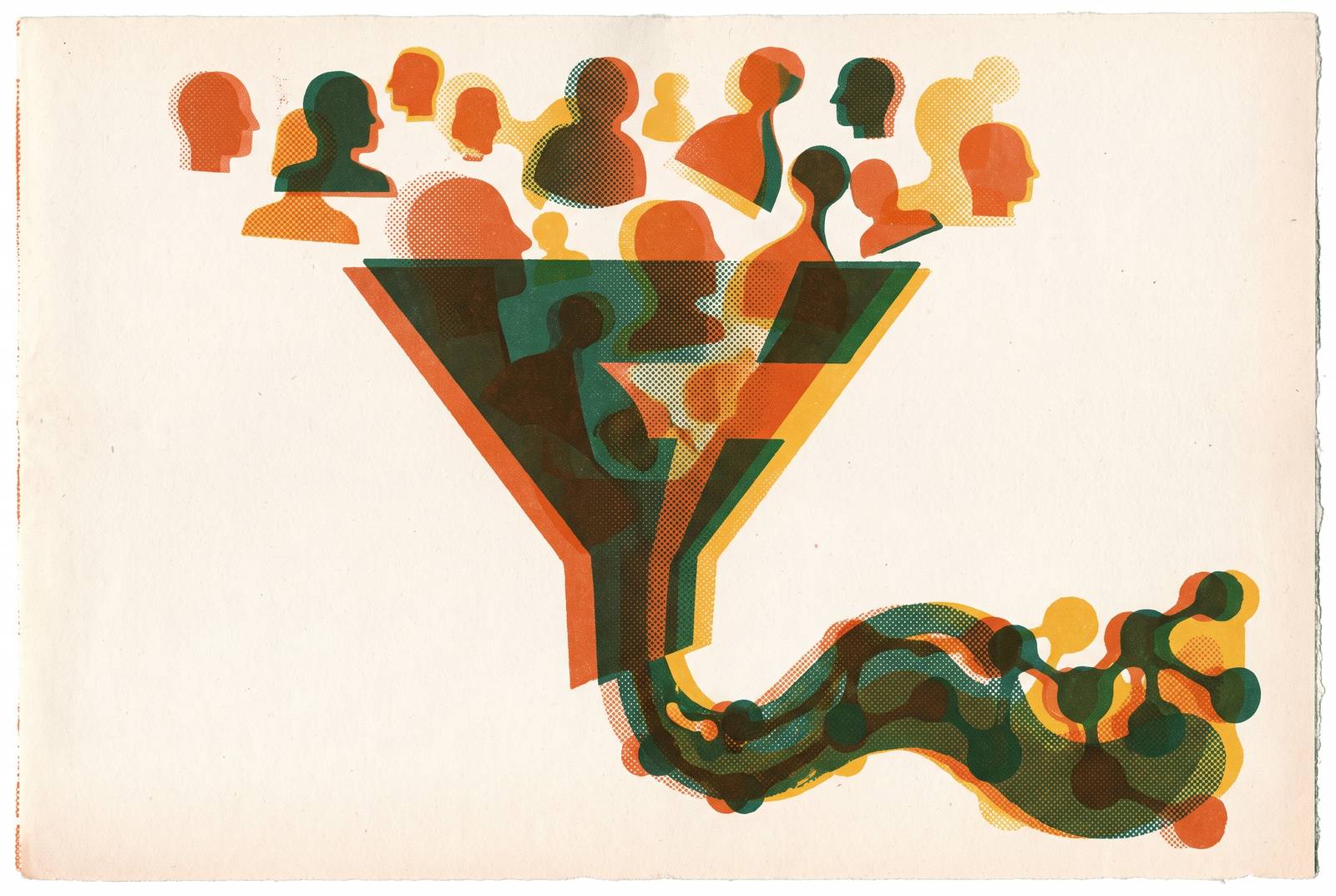
LinkedIn creator-sourced leads convert through the pipeline at measurably higher rates than leads from paid social or outbound, and the reason is trust compression: a buyer's skepticism toward a brand gets dissolved before a salesperson ever says a word.
Why LinkedIn Creator-Sourced Leads Behave Differently
A buyer who follows a creator has already made a decision. They chose to learn from this person, to trust their judgment on a topic that matters to their job. When that creator posts something sponsored, the post doesn't arrive as an ad. It arrives carrying the weight of a relationship the buyer already built, on their own terms, over time.
That's the mechanism: borrowed credibility. The creator's endorsement functions like a peer referral, not a brand message, because the audience relationship existed first and the commercial relationship came second. This is a different thing from reach or impressions. A sponsored post seen by a large audience that scrolls past it does nothing. A sponsored post does something when a substantial share of that audience has spent a year nodding along to this person's take on their industry, because it has already worked through the skepticism a buyer normally holds toward a vendor.
The LinkedIn-Ipsos 2025 B2B Marketing Benchmark backs this up directly. It found that expert endorsements are more likely to give a brand an edge over a rival than written content from the company itself. When buyers were surveyed, they named analyst or expert endorsement as the single most influential trust signal, ahead of other forms of brand communication. Buyers trust people they already know, not companies still trying to earn that trust.
What matters most here is that this isn't a soft, immeasurable effect, and it appears in conversion data at every stage of the funnel, which is what the rest of this piece lays out.
What the conversion numbers look like, stage by stage
Start at the top of the funnel: visitor to lead. Creator-sourced traffic converts to leads at a noticeably higher clip than paid social traffic, because the person clicking through already has context and some level of buy-in before they land on a page. They're not cold.
Moving to lead-to-opportunity, the gap widens. One documented case involving a B2B SaaS company in the operations software space used a micro-creator whose following was small but tightly matched to the company's ideal customer profile: operations directors, nearly across the board. That campaign produced a sales-accepted lead rate nearly six times that of the company's paid social campaign. Cost per sales-qualified lead dropped meaningfully at the same time, in the campaign that partially replaced the paid effort. That's a structural difference in how the leads behave once they're in the pipeline, not a marginal improvement.
Opportunity to close is where the effect compounds. Those are a full stage-by-stage trail that other teams can hold their own numbers against: visitor, lead, qualified lead, closed deal, each one attributed back to its source.
The pattern across both cases is the same. Trust compression doesn't just get more people into the funnel. It gets the right people in, and it keeps more of them moving through each stage without the drop-off that normally comes from a prospect who's never heard of the company before.
Audience Fit and the Conversion Gap
None of this belongs to creator marketing broadly. It belongs specifically to campaigns where the creator's audience overlaps with the brand's ideal customer profile, and that overlap is something a team chooses, not something that happens automatically because a creator posts often or has a large following.
LinkedIn's own data, presented at Cannes Lions, showed that niche-expert engagement substantially outperforms macro-creator engagement in B2B contexts. A creator with a small following who are almost all buyers in the right role will outperform a creator with a much larger following scattered across unrelated industries. The gap is about who is in the audience, not how big the audience is or how polished the content looks.
The TopRank and LinkedIn analysis of B2B campaigns confirms the same pattern from another angle: micro-led campaigns cut cost-per-qualified-lead meaningfully and improved content-to-demo-request conversion, again because the people seeing the content were denser with actual buyers than spread thin across a general audience.
Picking the right creator means checking whether their audience's job titles, company sizes, and industries match the ICP, whether the engagement on their posts comes from actual decision-makers commenting with real questions rather than vanity likes from unrelated accounts, and whether the creator already carries credibility with the specific buyer persona the brand is trying to reach. If a team picks the wrong creator, it treats follower count as a stand-in for reach, or checks engagement rates without asking who's behind them, or assumes topical overlap is enough without verifying the audience against the ICP. Follower count is the easiest number to see and the least useful one to act on. Audience composition takes more work to verify, and it's the number that predicts whether the trust mechanism from section one will fire.
How real campaigns are structured to capture and attribute creator-sourced pipeline
You can only see the conversion rates described above if you build measurement infrastructure before launch, not after. Most B2B teams that conclude creator marketing "doesn't work" have a measurement problem, not a channel problem: they never built the tracking that would let them see the pipeline.
That same documented case shows what the minimum viable version of that infrastructure looks like. Five creators each had a custom landing page, and HubSpot tracked all of it, so qualified leads and closed deals tied back to the specific post that generated them. Nothing exotic. No proprietary platform. It was just intentional setup done before outreach began, not bolted on afterward when someone in finance asks for ROI.
LinkedIn also offers a three-layer amplification stack, and you need to understand it before a campaign launches. An organic creator post can be amplified as a Thought Leader Ad, and from there pushed further through BrandLink in-stream pre-roll, which places video alongside creator and publisher content directly in people's feeds. According to LinkedIn's own reporting, Thought Leader Ads produced substantially higher click-through rates, lower cost per click, and higher lead-gen form completion rates than standard single image ads. So the creative source carries real weight in these numbers, independent of targeting.
The two hardest parts of this setup live outside Campaign Manager entirely: contracting and measurement. Before outreach starts, a team needs a creator brief, a contract template that covers usage rights and exclusivity terms, an invoicing path finance will actually accept, and ad campaigns tagged separately and connected to CRM records so leadership sees real pipeline attribution. One caveat matters here: platforms like BrandWorks don't automatically enforce category exclusivity. If a contract doesn't say otherwise, creators activated through BrandWorks or a self-serve marketplace can work with competitors at the same time. That's a negotiation a team has to initiate, not a protection that comes built in.
Dark social complicates the picture further. Much of B2B research happens in private Slack groups, WhatsApp threads, forwarded screenshots, and conversations between colleagues, and none of that is visible in any tracking link. That's a real limitation on deterministic attribution: some creator-driven pipeline will always go uncounted even though it was produced. Teams that account for this in how they report influence, instead of dismissing the channel because the tracking undercounts it, end up with pipeline numbers leadership can actually trust.
Returns from Programs Built on ICP-Matched Creators
Creator programs that are built with the right audience fit and run consistently produce returns that compare well against any other B2B acquisition channel, and those returns tend to grow as the relationship between creator and audience deepens over time.
Mature, always-on creator programs showed strong ROI by the 12-month mark, and when the creator genuinely matched the ICP, returns reached as high as 20 to 1. That kind of multiple isn't typical of most paid channels at any point in their lifecycle, let alone after a year of running. Two documented cases show what that return looks like in practice. At one HR tech company, a substantial share of pipeline in a single year traced back directly to LinkedIn posts, and chief people officers from major brands reached out before they'd even seen a demo, already won over by the philosophy behind the product. At Brij, a B2B SaaS company, turning the founder into an authentic, consistent content creator produced dramatic revenue and pipeline growth with no significant paid spend behind it, showing the scale came from audience fit.
Deal velocity moves the same way. When a buyer has already absorbed founder or creator content before a sales conversation starts, the enterprise sales cycle compresses, because that buyer walks into the first call ready to buy, not still deciding if the company is credible.
One reporting trap catches teams that haven't accounted for this pattern. Thirty-day return on ad spend for LinkedIn B2B SaaS campaigns tends to look weak, because long sales cycles delay when revenue gets recognized against the campaign that generated it. That's a problem with the reporting window, not with the channel. Teams that cancel a creator program after a month of flat-looking ROAS are misreading a lag, not a failure.
Creator-Sourced Pipeline vs. LinkedIn Ads and Paid Search
Creator-led organic content and paid LinkedIn advertising don't compete for the same budget line in any meaningful way. They work through different trust mechanisms, and run together, they produce better pipeline economics than either one running alone.
Thought Leader Ads, which amplify a creator's organic post rather than brand-made creative, outperform single image ads on click-through rate, cost per click, and lead-gen form completion. The source of the creative drives that difference as much as the targeting behind it. Set against standard paid social more broadly, B2B influencer content delivers higher organic engagement and a lower effective cost per thousand impressions than corporate sponsored posts, and leads influenced by that content convert at consistently higher rates because of the peer-recommendation trust behind them.
A hybrid approach extends the advantage further. CapConvert's paid-media analysis found that pairing top-of-funnel awareness on platforms like TikTok or X with LinkedIn paid capture at the bottom of the funnel delivers much higher ROI than a single-channel approach. First the organic layer pre-qualifies an audience, then the paid layer captures that audience at scale once it's warm.
Planning any of this requires a real baseline, not a generic social media average. GrowthSpree's 2026 B2B SaaS LinkedIn benchmark, built from a large pool of managed spend across hundreds of accounts, reports median MQL-to-SQL conversion that varies by ACV tier. You need those tier-specific numbers as the comparison point for creator-sourced leads, because if you compare a creator program against an undifferentiated social media average, you'll always understate or overstate the result, depending on which tier the company sits in.
Scaling the creator program beyond the founder without losing the trust signal
It's tempting to conclude the whole mechanism depends on one charismatic person, but it doesn't. The trust architecture depends on credibility with the buyer, and credibility is something a company can build in more than one person as it grows.
Founder content works because prospects who've followed and trusted the founder arrive at the first sales conversation already most of the way convinced, which is the same trust compression at work in creator-sponsored content aimed at external audiences. The mechanism is identical. The source just happens to be internal.
By Series B, a founder can't carry that voice alone and run a company at the same time. The path forward is adding named domain specialists, a VP of Engineering, a Head of Product, a Head of GTM, each building their own voice on their own content ladder. This broadens the surface area of trustworthy content without turning any of it into generic brand messaging, because each voice still belongs to a specific, credible person, not a logo.
Once those internal voices are established, you can add external creators whose audiences overlap with the ICP on top, which extends reach without diluting the trust the company has already built internally, as long as you apply the selection criteria laid out earlier with the same rigor every time. The operational complexity multiplies fast at this stage: multiple internal voices, multiple external creators, briefs, contracts, payouts, and attribution tracking all running at once. Teams that scale this successfully build out the operational layer, the contracts, the tracking, the invoicing, so that it runs on its own, leaving the actual creative and relationship work to stay human. That's the whole argument in practice: creator-sourced pipeline converts at higher rates because trust compresses skepticism before the first sales touch, and that mechanism can be engineered to run at scale, not just at the size of a single founder's following.