Specialist vs. Generalist B2B Influencer Marketing Services
Specialists beat generalists when audience fit and pipeline attribution matter most.
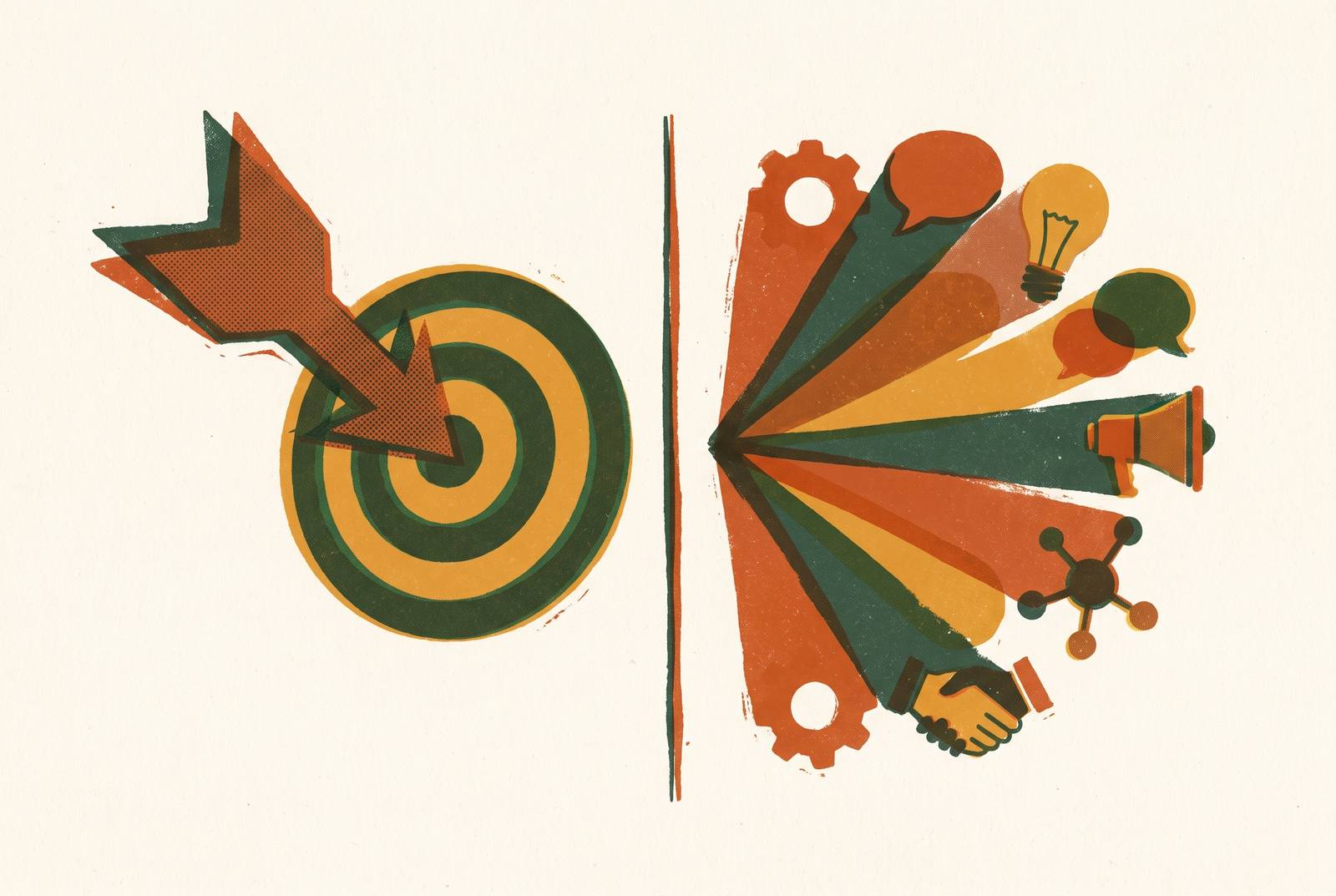
Choosing a B2B influencer marketing service isn't a question of which agency has the bigger logo wall. It comes down to three things: can the service match creators to your specific buyer audience, can it attribute results to pipeline, and can it operate within the complexity of a B2B sales cycle.
Why the specialist-vs-generalist question matters more in B2B than in any other context
More than half of B2B marketers, 55%, already run creator or influencer programs on LinkedIn, and another 29% say they'll start within the year LinkedIn-Ipsos 2025 B2B Marketing Benchmark. That's not an experimental channel anymore. Every marketing team is now stuck making a structural decision: hire a generalist agency that already runs consumer accounts alongside B2B ones, or find a specialist built specifically around how B2B buying actually works.
The decision isn't about agency size or reputation. It comes down to whether the service can do three specific things: match creators to real buyer audiences, connect results to pipeline dollars, and function inside a sales process with many stakeholders and a long timeline.
That matters so much more in B2B than in consumer marketing. A B2C purchase might involve one person and a five-minute decision window. A B2B purchase involves many internal stakeholders and multiple external influencers, and it's measured in months, not days. Trust works differently too: credibility carries more weight than reach. Moburst's analysis found that being named a top solution by analysts or industry experts is the single most influential trust signal for 37.9% of B2B buyers, ranking above both video and written testimonials moburst.com. Creator selection in B2B is a precision problem, not a volume problem moburst.com.
What generalist influencer marketing services are built to do
Generalist agencies grew up serving B2C's core currency: reach, impressions, and brand-safe placements running simultaneously across Instagram, TikTok, YouTube, and LinkedIn. Their entire infrastructure, the creator databases, contract templates, rate cards, reporting dashboards, got built around fast campaign turnover, content volume, and CPM-based measurement.
None of that makes them weak partners across the board. They bring real strengths that show up in some B2B scenarios too: large creator rosters, established brand-safety review processes, production capacity, and experience juggling deliverables across multiple platforms at once. Roughly 67% of marketers use micro-influencers as their most common tier, per the Influencer Marketing Hub's benchmark, and generalist platforms tend to have plenty of supply there. The catch is how that supply gets filtered. Generalist tools sort by follower count and category tag, not by verified audience role or industry composition.
That's the structural gap. Generalist tools sort creators by audience size and content category, not by whether a creator's followers match a specific ICP such as DevSecOps practitioners at companies with 200–2,000 employees. Attribution runs into the same wall. Generalist models typically measure clicks and engagement, CPM, CTR, earned media value, and stop there. None of those metrics connect to pipeline or revenue, which happens to be the exact standard B2B marketing leaders get held to internally. This isn't a knock on quality. A generalist service built for consumer conversion funnels simply wasn't architected for a B2B buying cycle, and it shows in the seams.
What a B2B specialist service has to do differently to earn that label
A real B2B specialist has to filter creator discovery by audience composition, not follower count. That means job titles, seniority levels, industries, and company sizes represented in a creator's actual following, not demographic guesswork.
There's data backing why this matters so much. LinkedIn data presented at Cannes Lions showed niche expert engagement in B2B running roughly 1.9 times higher than macro creator engagement. That's a structural argument for relevance over reach, and it's the kind of number a genuine specialist bakes directly into how it picks creators. Moburst's 2026 research adds another layer: expert endorsements are 1.7 times more likely than a company's own written content to give a brand an edge over a rival moburst.com. The specialist's actual job is finding the creator who reads as a genuine expert to one specific buyer community. It's finding the creator who reads as a genuine expert to one specific buyer community moburst.com.
Attribution capability isn't optional here, it's the whole point. The service has to connect specific creator posts to clicks, leads, and pipeline dollars, not just impressions LinkedIn Global B2B Marketing Outlook 2026. LinkedIn's Global B2B Marketing Outlook found 82% of B2B marketers believe creators strengthen credibility with decision-makers, but credibility nobody can measure is credibility nobody can put a budget behind LinkedIn Global B2B Marketing Outlook 2026.
Operationally, the whole architecture has to shift too: longer campaign windows built around multi-post sequences across weeks rather than single drops, contracts that bake in usage rights for Thought Leader Ad amplification from day one, and payout and reporting systems that actually survive procurement and finance review. LinkedIn is where most of this distribution happens, with 59% of B2B buyers reporting they consume creator content there, so a specialist needs to understand how organic posts and Thought Leader Ad amplification work together, which is a genuinely different mechanic than anything on Instagram or TikTok dataslayer.ai.
There's a simple test for any service that calls itself a B2B specialist. Ask it to name credible creators in your specific niche, unprompted, right there in the meeting. Real network depth appears immediately in the meeting itself. Database access dressed up as expertise does not.
The audience-fit problem's hidden difficulty
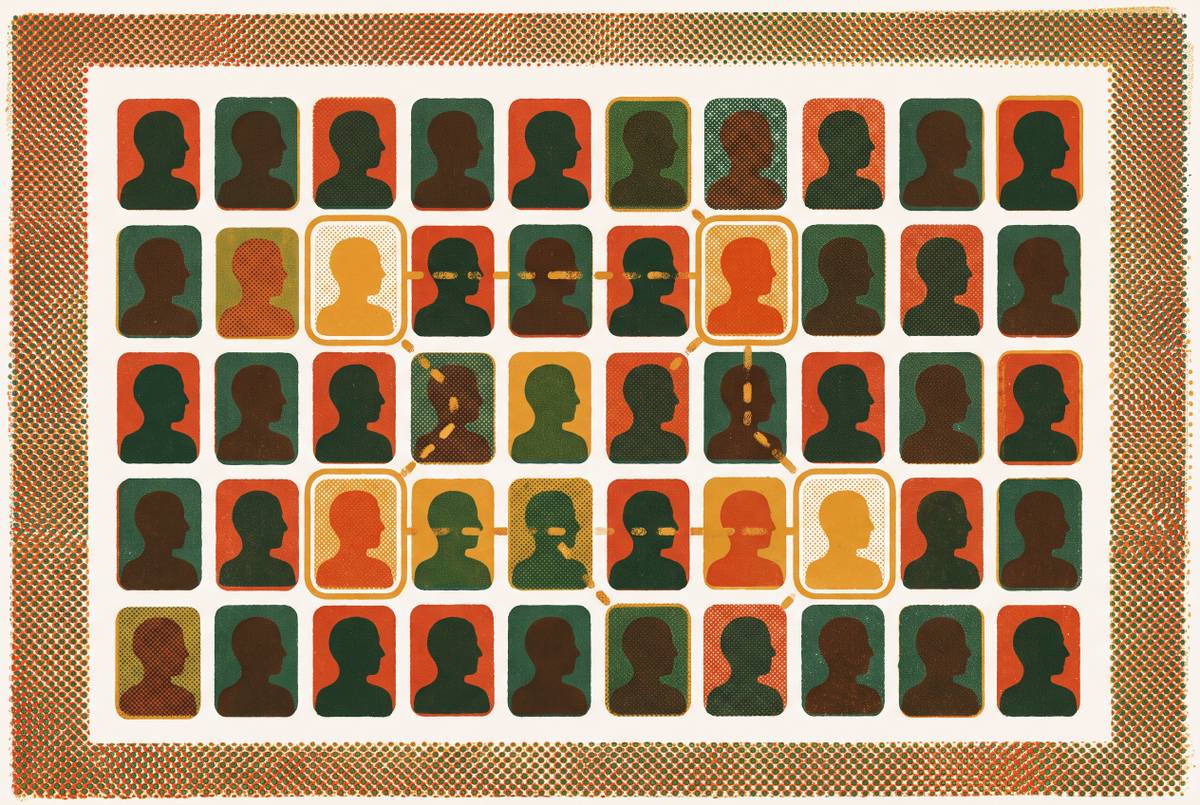
B2B buyer audiences are small, defined by role, and more varied than they look on paper. "Marketing professionals" as a category covers a CMO at a Series B SaaS company and a social media coordinator at a regional retailer, and treating those as the same buyer is where a lot of programs go wrong from the start.
A creator with a tightly matched audience of a few thousand followers in revenue operations, DevSecOps, or supply chain finance can outperform a generalist marketing influencer with an audience many times larger. The conversion probability per impression just isn't the same, and no amount of extra reach fixes a mismatched audience. Later's Influencer Marketing Report found 73% of brands now prefer micro and mid-tier influencers for better engagement-to-cost ratios, but that preference for smaller creators only pays off in B2B if the selection criteria is audience role composition, not just smaller size Later's 2025 Influencer Marketing Report.
Most creator platforms report audience demographics at a surface level, age, gender, geography. Verified ICP density, meaning what percentage of a creator's followers actually match your buyer profile, requires either platform-level data access or first-party disclosure from the creator. That's exactly why audience-fit claims vary so wildly in accuracy from one service to the next.
LinkedIn's own Creator Marketplace, launched June 10, 2026, is trying to close part of this gap by letting brands evaluate creator profiles using audience demographics that include job title and industry. It's a real structural improvement over follower-count-based search, though it's currently in alpha for certain North American advertisers with English content only, so coverage isn't yet broad. Any partner should be able to provide verified audience composition data instead of estimated demographics, case studies naming the actual creators used and buyer segments reached, and rate negotiation anchored to ICP density rather than raw follower count.
What breaks attribution in B2B creator campaigns run through generalist setups
Tracing a B2B creator post to real pipeline means connecting it to a click, then a form fill or content download, then a qualified lead, then an opportunity, and eventually closed revenue, sometimes months after the original post went up. Generalist measurement frameworks were built for a completely different timeline: a purchase within days of a post, usually pushed along by a discount code or affiliate link. Those mechanics simply don't map onto a multi-stakeholder B2B evaluation process.
The upside case for creator investment in B2B is genuinely strong. Brands running these programs outperform non-users by up to 39% on customer engagement and brand awareness, and by 30% on revenue growth and lead generation, per the LinkedIn-Ipsos benchmark LinkedIn-Ipsos 2025 B2B Marketing Benchmark. But capturing that gap for your own program requires the measurement infrastructure to actually prove it happened LinkedIn-Ipsos 2025 B2B Marketing Benchmark. 83% of marketers report that sponsored influencer content outperforms brand content on conversions (Sprout Social Q1 2025 Pulse Survey), and the measurement infrastructure to capture that conversion lift is what separates programs that prove their value from those that survive on faith alone TopRank Marketing's 2025 B2B report.
Functional B2B attribution has a few specific parts: UTM parameters and tracked landing pages scoped to individual creators, lead attribution windows long enough to catch the real evaluation cycle (often 60 to 90 days, not the seven-day window a consumer campaign might use), pipeline reporting that ties leads through to opportunities inside the CRM, and integration with paid amplification so organic and paid touchpoints from the same creator get counted together. The diagnostic question here is blunt: ask for case studies with specific pipeline numbers, not reach, not impressions, not engagement rate. Agencies with real B2B measurement capability will produce this without flinching. Agencies without it will steer the conversation back toward awareness metrics.
This is also where the ROI story either holds up or falls apart linkfluencepartners.com. Reports of $5.20 to $6.50 in attributed pipeline per dollar spent on B2B influencer programs only mean something to a CFO if the attribution methodology behind them is defensible linkfluencepartners.com. Generalist measurement setups typically can't produce that chain of evidence for a B2B program, no matter how good their dashboards look for a consumer campaign linkfluencepartners.com.
What B2B sales cycle complexity requires from a service operationally
B2B programs need things consumer campaigns never had to think about: longer brief development that clears legal and product review, multi-post sequences instead of single drops, usage rights for paid amplification locked in from the start, contracting that survives procurement, and payout timing that lines up with finance cycles.
The multi-post part matters more than it sounds like it should. Brands running three-to-five-post arcs with a single creator over six to eight weeks see meaningfully better cost-per-lead than single-post sponsorships. A generalist platform built around one-off activations just doesn't have the workflow to manage that kind of sustained arc efficiently at scale. The strongest documented returns, reportedly as high as 420% over twelve months, appear in always-on programs, where creator investment gets treated as infrastructure across quarters rather than a line item on a single campaign influencerstrategists.com. Sustaining that requires a service model built for long-running creator relationships, not one built for transactional bookings influencerstrategists.com.
The brief-to-payout pipeline produces all of it. B2B campaigns need structured or AI-assisted brief creation to convey technical product context accurately, contract terms that include Thought Leader Ad usage rights, and payout systems that don't require someone manually cutting checks. Manual management of all this at any real scale is usually the exact reason B2B teams hit a wall trying to grow their creator programs. LinkedIn's BrandWorks team, launched internally in March 2026 and led by Alex Josephson, VP of BrandWorks, offers hands-on strategy and support for in-app campaigns, with early clients including SAP and Webflow. That's LinkedIn effectively admitting a self-serve ad interface isn't enough for B2B campaigns on its own.
A practical test for operational fit: ask how a service handles usage rights for paid amplification at the contract stage, how it briefs creators on technically dense B2B products, and what a six-post sequence with one creator over two months actually looks like in practice. The answers tell you whether the infrastructure was built for B2B from the ground up or bolted on after the fact.
Scenarios where a generalist service is a reasonable choice
Generalist services aren't wrong for every B2B situation. Generalist services make sense when the goal is genuine brand awareness across a broad professional audience rather than a narrow ICP, when the product has wide appeal across industries, when a team needs a lot of content fast, or when the brand is large enough that sustained presence matters more than pinpoint audience fit.
They're a poor match when the ICP is narrow, defined by a specific job title, industry, or company size. They're also a poor match when the marketing team gets held accountable for pipeline and cost-per-lead rather than impressions, when the buying cycle is long and involves multiple stakeholders, or when budget is tight enough that wasted reach is a real cost, not just an inefficiency. Certain verticals make the specialist advantage especially clear: technology and SaaS, financial services, HR and recruiting, cybersecurity, and enterprise software, because buyer audiences in those categories are tightly defined and unusually sensitive to credibility.
Picture a Series B SaaS company trying to reach revenue operations leaders at mid-market companies. That ICP is narrow enough that a generalist platform's creator database, filtered by category tag instead of audience role composition, is going to produce mismatches over and over. Every mismatched post is budget spent talking to the wrong room. On the other end, a large enterprise launching something horizontal, a productivity suite meant for every knowledge worker regardless of industry, might get real value from a generalist service's scale and multi-platform reach, at least during early awareness phases.
An honest middle path exists. Some programs should start with a specialist to handle ICP-matched creator discovery and attribution infrastructure, then bring in generalist amplification later for reach expansion, once the core creator relationships and measurement framework are already solid.
The evaluation framework: six questions to ask any service before committing budget
Ask any service how it handles usage rights for paid amplification at contract stage, how it manages creator briefing for technically complex B2B products, and what its workflow looks like for a six-post sequence with a single creator over two months (the answers reveal whether the operational infrastructure was built for B2B or adapted from B2C).
Can the service show verified audience data for creators in your specific niche, broken down by job title, seniority, and industry, not just estimated demographics? Can it name ten credible creators in your vertical right now, unprompted, with recent post examples to back it up? Can it produce case studies with specific pipeline numbers, leads, opportunities, or revenue, attributed to named creator posts with a sourced methodology? Agencies that actually understand B2B measurement will have this ready. Agencies that don't will hand over reach and engagement numbers instead.
How does the service structure multi-post campaigns over six to twelve weeks with a single creator, and what does the brief, approval, and revision workflow look like for a technically complex product? Does its standard contract include usage rights for Thought Leader Ad amplification from the outset, and does its reporting unify organic and paid performance from that same creator post? And operationally: how are briefs actually created, are they AI-assisted, templated, or done by hand, and what does contract management look like once a program has five to fifteen active creators running at the same time?
The answers reveal whether a service's operational model was built for B2B scale, or for transactional consumer campaigns. A B2B marketplace built specifically for this problem, one that filters creators by verified audience fit against real buyer profiles, manages briefs and contracts end to end, and traces pipeline back to individual posts, answers all six of these structurally rather than case by case. That's the actual bar. Everything else is a variation on how close a given service gets to it.
Sources
- The State of Influencer Marketing for B2B Brands in 2026 | Moburst
- Influencer Marketing Benchmark Report 2026
- 85 vital influencer marketing statistics for your 2026
- Influencer Marketing ROI 2026: Benchmarks, Stats and How to Track Returns
- How to Measure B2B Influencer Marketing ROI on LinkedIn
- B2B Influencer Marketing in 2026: How Creator-Led Growth Became a System For B2B | Influencer Strategists