Building a Vetted Creator Roster for Ongoing B2B Campaigns
A standing roster of vetted creators outperforms one-off campaigns by 17 times over.

LinkedIn's own data on B2B influencer marketing makes one thing hard to argue with: companies running an always-on creator program call it effective 99% of the time, while episodic programs fail at 17 times that rate. The gap isn't about creative talent or luck. It comes down to a roster: a standing bench of vetted creators versus starting from scratch every campaign.
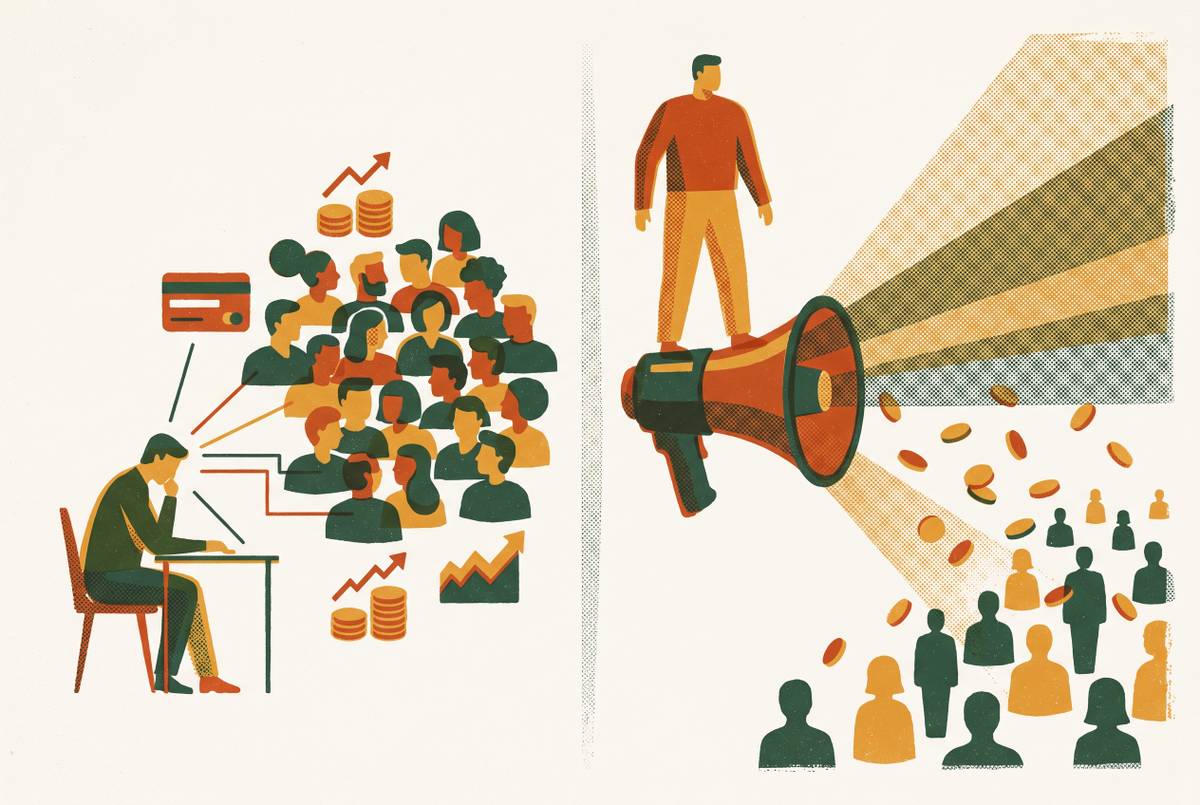
A one-off means rebuilding the whole thing every time. New search, new contract, new onboarding, new guesswork about whether this person actually reaches the right buyers. A roster skips all of that. It's a bench of people already vetted, already briefed on the product, ready to activate for the next push without redoing the legwork. A roster functions like a real acquisition channel, while a scattered pile of sponsored posts does not.
The B2B Creator Market and Viable Candidates
Start with where the audience actually sits. LinkedIn is the dominant source of B2B social leads, accounting for 80% of B2B social media leads, and a creator's personal post on the platform significantly outperforms the same content posted from a corporate page. Sourcing is settled. The harder task is determining who, out of everyone posting on LinkedIn, actually counts as a viable candidate for a roster.
Four types of creators matter, and they are not interchangeable.
Industry analysts, the Gartner and Forrester types, plus independent researchers, carry the most weight late in a buyer's evaluation. A significant share of B2B marketers rate this group as their most effective creator tier. They're also expensive, slow to book, and wrong for a program that needs content every week.
Customer influencers, meaning actual buyers who already post on LinkedIn, come in second among the most effective creator tiers. Their credibility comes from having used the product. It's earned by having used the product. Activating them runs through community programs or co-marketing deals more often than a standard paid post.
Independent operator-creators, founders, VPs, senior individual contributors who write about their own work, are the most cost-efficient tier for a sustained program. Their follower counts look small next to a macro-influencer's, but don't let that fool you: a creator with a modest following who's respected among finance leaders reaches an actual buying committee. A generalist with a large scattered following mostly reaches people who will never sign a purchase order.
Internal executives round out the list. LinkedIn's own data puts employee networks at roughly 12 times the size of a company's official page following. An executive who posts consistently under their own name is a multiplier before a single dollar of sponsorship gets spent, which makes this the cheapest category on the list by a wide margin.
Favikon's analysis of 132 companies running LinkedIn creator campaigns found 83% were SaaS companies and 31% were AI-first, marking the competitive set. That's the competitive set. Anyone building a roster right now is competing with those companies for the same handful of credible voices.
The vetting criteria that separate audience fit from follower count
Follower count is the wrong first filter, and treating it as the main one is the single most common mistake in this whole process. A creator with a large following and no overlap with the buying committee is worth less than one with a much smaller following who are almost entirely the people who sign purchase orders. Reach measures exposure. It says nothing about intent.
LinkedIn's 2025 B2B Creator Marketing Research, based on 1,716 surveyed decision-makers, backs this up. 59% of B2B buyers consume creator content on LinkedIn more than on any other platform. 82% say that content directly shapes their decisions, and 87% say they prefer content from creators they already consider credible in the field. Credibility does the work here. Audience size doesn't.
Expert endorsements are 1.7 times more likely than a company's own content to tilt a buyer toward one vendor over another, a commercial mechanism that explains buyers' preference for expert voices. And 37.9% of B2B buyers name "top solution according to analysts or industry experts" as the single most influential trust signal in a purchase decision. Vetting exists to find creators who can produce that exact effect, on purpose, over and over.
A workable scoring model spreads 100 points across seven criteria. ICP alignment gets 25 points: does the creator's audience actually match the target role, industry, and buying stage. Category authority gets 20: real experience, substance, recognition from peers. Audience trust gets 15: comment quality, disclosure habits, willingness to call out a bad product. Creative compatibility, partnership reliability, cost efficiency, and commercial potential split the remaining 40, at 10 points each.
The weighting is the point, more than the exact numbers. ICP alignment and category authority together make up nearly half the score, because those two factors predict whether the creator's audience contains real buyers. Everything else is secondary to that.
Structuring a Test Activation Before Committing a Creator to the Roster
A scoring model, no matter how carefully built, doesn't tell you what happens when the content actually goes live. That's the whole reason to run a test first: it's where the assumptions behind the vetting score meet a real audience's real reaction.
Test three things, specifically. First, who shows up in the comments: actual buyers, or a pile of other creators cross-commenting for their own visibility while nobody from the real buying committee says a word. Second, the creator's voice either survives a brand brief or flattens into something that reads like an ad the second a sponsor's name appears. Third, this particular creator handles some formats well and others poorly, whether that's a tight text post, a carousel, or video, and that format's fit with the category determines its performance.
LinkedIn's 2026 algorithm changes matter here. The platform now weighs deeper engagement signals, dwell time, comment substance, saves, and private shares, ahead of surface reactions like a quick like. A test post that pulls fewer likes but a stack of saves and real comments is outperforming in distribution terms, even if it looks quiet on the surface. Don't judge a test by the like count.
Keep the test small with one or two pieces of content, a UTM-tagged landing page, and a clear tracking setup. Nothing that looks like a full campaign commitment yet. Track click-through, track any lead or form-fill tied back to that specific post, and read the comment thread line by line. Who's actually there, and what are they saying.
The onboarding process that sets a creator up for ongoing performance
Most B2B creator programs fail right here, at onboarding, when a creator gets handed a brief that's thin on the actual buyer, the actual product, and the actual competitive landscape. The resulting content shows that gap in every sentence it produces.
Real onboarding covers five things before a creator publishes anything under a brand's name. An ICP briefing lays out buyer personas, the problems the product solves at each stage of what tends to run as a roughly 272-day B2B buying journey, and which buying-committee roles map onto the creator's own audience. A brand voice reference states what the company actually believes, what it won't claim, and which competitors are off-limits to name by name. A content angle library, a bank of themes and formats that already worked, gives the creator a starting point without boxing in their voice. Attribution setup requires the UTM structures and landing page variants the creator needs to use consistently, so results trace back to the right post. Payout terms: rate, payment schedule, revision expectations, disclosure requirements, all locked down before content ships.
Favikon documented a $12,000 creator program that produced $1.1 million in attributed pipeline. That return doesn't happen because the creator was talented in some abstract sense. It happens because the creator understood the product and the buyer well enough to write something that actually moved one.
The operational side is just as make-or-break as the brief itself. Managing briefs, contracts, and payouts across a dozen or more creators at once is exactly where B2B teams stall trying to scale a program past two or three names. Onboarding has to run as a repeatable system, not something rebuilt by hand every time a new creator joins.
Running the ongoing campaign cycle with roster creators
The substantial gap between always-on and episodic programs traces straight back to having a roster. A roster is what makes always-on possible in practice. Without a standing bench, "always-on" just means constant re-sourcing, and nobody actually keeps that up for more than a quarter or two.
A working cadence runs on monthly or quarterly brief cycles tied to product launches, demand gen pushes, or seasonal buying windows. Rotate angles across the roster instead of leaning on one creator repeatedly, both to avoid burning out that person's audience and to make sure different buyer roles hear from different voices. Vary format within each cycle too: LinkedIn video pulls 3 to 5 times the organic reach of a plain text post, while carousels and structured posts tend to earn more saves and repeat visits.
Paid amplification is a second layer, added once the organic data comes in. LinkedIn's Thought Leader Ad format lets a brand put budget behind a creator's organic post, reaching past that creator's own audience while keeping their name and voice attached. Sponsored posts through this format run at roughly 15 to 20% of average LinkedIn CPM, so the trust benefit of creator content costs a fraction of cold display advertising. Let the organic signals, dwell time, saves, comment substance, decide what gets amplification budget. Don't guess.
One distinction belongs in every brief: co-creation versus ghostwriting. Content where the creator contributes an actual point of view beats content a brand wrote and handed off for the creator to post under their own name. Every time. Audiences track authenticity closely, and a post that reads like someone else wrote it loses trust fast, no matter whose name sits above it.
Measuring creator performance in pipeline terms, not impression terms
A growing share of brands now measure creator programs on CAC and ROAS instead of impressions, treating LinkedIn as a social selling engine rather than an awareness channel. That's the right call, and any team still reporting on reach and engagement rate as headline numbers is measuring the wrong thing.
Rank the signals from strongest to weakest. Pipeline attributed to a specific creator's post, tracked through UTM parameters, landing page variants, or CRM source tagging, sits at the top. Below that: leads and form-fills with creator attribution attached. Below that: clicks and click-through rate to tracked destinations. At the bottom: impressions, reach, and engagement rate, useful for diagnosing whether the creative itself is any good, but weak grounds for justifying budget to anyone holding the purse strings.
Attribution in B2B is genuinely harder to pin down than in consumer marketing, because nobody buys alone. A purchase runs through a committee, sometimes five or six people deep, and a single creator post almost never closes a deal by itself. What it does, when it works, is move one person on that committee slightly closer to arguing for the purchase internally. That's a real outcome. It's just a quieter one than a conversion number on a dashboard.
Every creator on the roster needs a scorecard, updated at each campaign cycle: pipeline attribution, lead volume, click-through, and a plain qualitative read on audience engagement, tracked side by side. That scorecard is what turns a list of names into an actual channel, the kind where the next brief goes to whoever earned it, not whoever's been on the roster longest.