Self-Serve vs Managed Creator Campaign Models for B2B Teams
Self-serve demands internal ops rigor, but managed models cost more upfront.
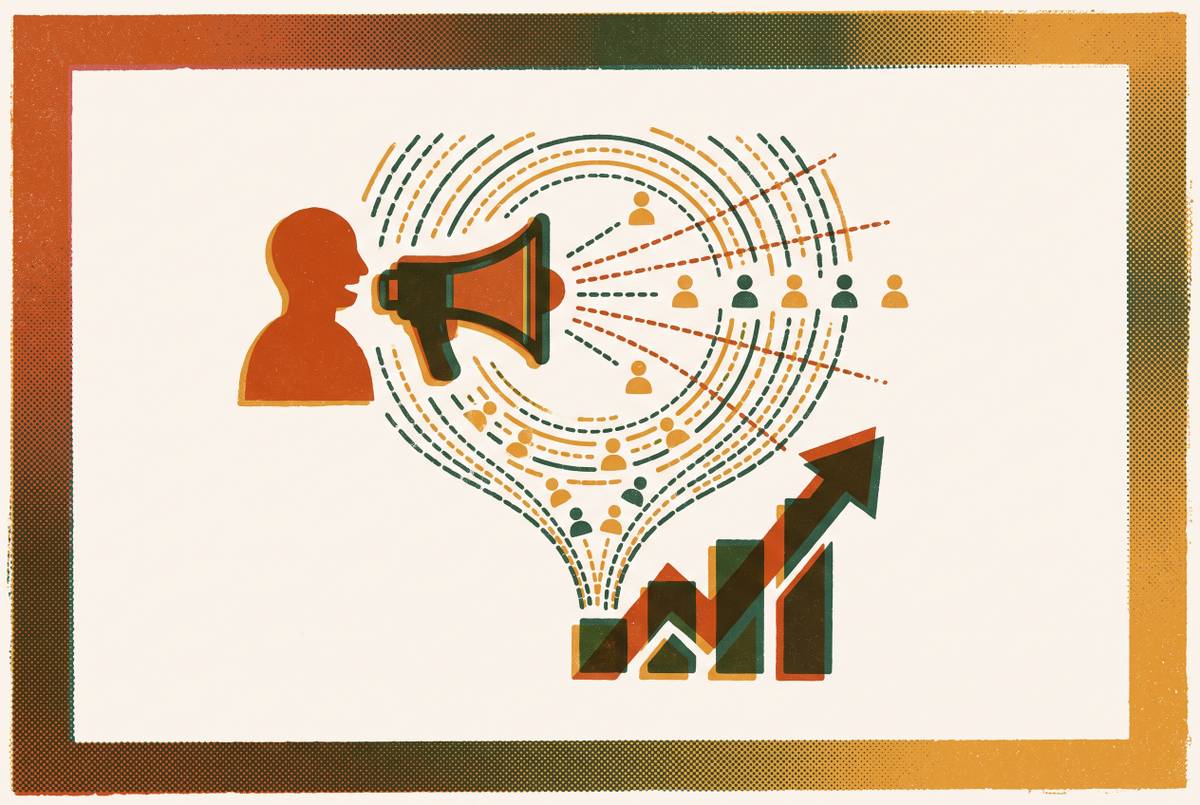
B2B creator-led growth on LinkedIn has stopped being a test program, and now teams are expected to run it as a channel. The real question teams face now is how to operate creator work so it holds up under budget scrutiny.
Running creator programs at scale
LinkedIn made its position clear at Cannes Lions 2026. The platform moved from a side presence to a central one in business marketing, returning as headline partner of LIONS B2B, taking over the Carlton Hotel rooftop, and building creator zones inside its penthouse space for collabs and content production. LinkedIn also noted that the number of creators on the platform has nearly doubled since 2021. LinkedIn buyers now form opinions well before a sales conversation starts, and that kind of investment shows it.
Programs running in mid-2026 are being judged on more than reach and engagement. Marketing teams are now answerable for MQLs, SQLs, and influenced revenue tied to specific creator campaigns. When a channel gets measured against pipeline, the team running it needs an operating model that can survive that scrutiny as spend grows. So you face a choice between self-serve and managed, and gut feel can't settle it. It comes down to a team's actual situation.
Self-serve and managed in B2B creator campaigns
Teams often blur two separate questions: how they run a creator program day to day, and how they get access to creators and the tools to work with them. Sorting those out first makes the rest of the decision much clearer.
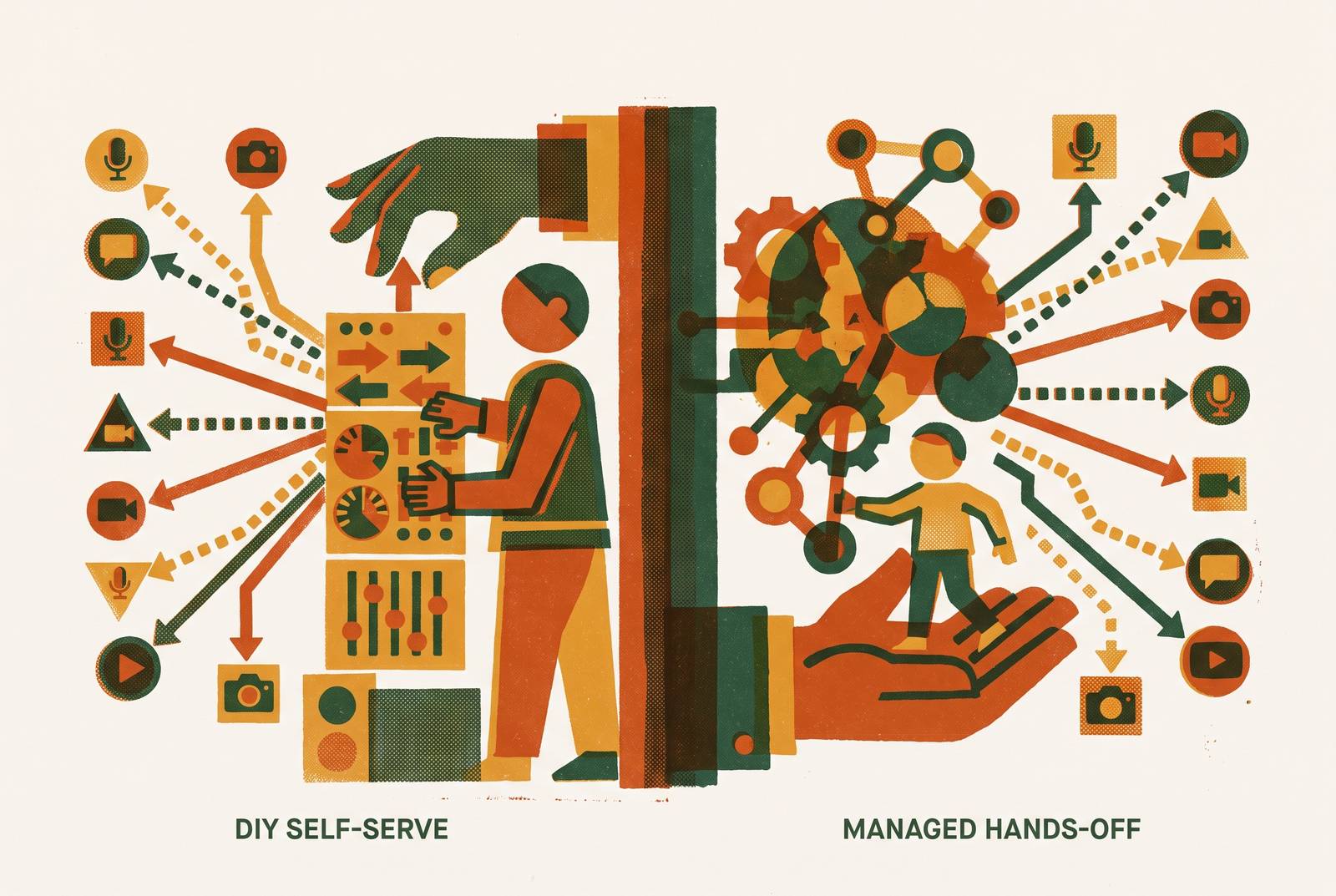
Self-serve means the marketing team owns every step: finding creators, vetting them, writing briefs, handling contracts, paying out, and reporting results, either by hand or through a platform that automates parts of it. It takes internal bandwidth, a repeatable brief process, a system for managing creator relationships, and attribution tracking set up before the first post goes live. In exchange, teams get speed. With the right infrastructure in place, a campaign can go from idea to live post in days.
Managed means a platform, agency, or managed service team handles strategy, creator sourcing, brief writing, coordination, and reporting, while the internal team sets direction and signs off on the output. It costs more and hands over some control, but it solves creator sourcing and workflow setup fast, which matters most when a team has no creator relationships, no attribution setup, and no spare capacity to build either.
LinkedIn's own product lineup shows this split clearly. LinkedIn Creator Marketplace sits inside Campaign Manager, and you use it to find vetted creators on your own. BrandWorks is a managed team that handles strategy and creative production, but it's only available to select managed accounts. Either way, LinkedIn stops at discovery. There's no in-app contracting, no brief system, no transaction layer, so the operational work lands on the marketing team no matter which LinkedIn product they're using.
Neither model is better on its own terms. The right one depends entirely on what a team can actually support, which is the question the rest of this piece works through.
The factors that determine which model fits a team right now
Three measurable variables decide which model fits a team: internal bandwidth, campaign complexity, and attribution maturity. None of them are matters of taste.
Internal bandwidth comes first. A LinkedIn creator partnership involves talent identification, contract negotiation, brief development, compliance review, exclusivity windows, and multi-touch attribution. So you're closer to running a sponsorship than placing a programmatic ad buy. Teams without one person who can own that entire workflow end up with campaigns that stall at the brief stage, or that launch with no attribution tracking at all, which makes the results impossible to defend later. If someone owns the full workflow, self-serve works. If no one does, managed is the sound choice.
Campaign complexity is the second factor. A single sponsored post is easy to run self-serve. A multi-post arc, say three to five posts per creator over six to eight weeks, across several creators, each post carrying its own UTM variant and fitting into a larger content sequence, is a different kind of problem. Enterprise brands running sustained creator series show what that complexity looks like in practice: SAP's "AI in Action" campaign with Allie K. Miller and Bernard Marr, run through LinkedIn's BrandLink program, and ServiceNow's "The CEO Playbook" with Steven Bartlett and Dorie Clark. So programs at that scale tend to push teams toward managed support, or at least heavy operational help.
Attribution maturity is the third factor, and the one teams underestimate most. LinkedIn's own measurement guidance cites Forrester research, and it shows that most B2B marketing leaders distrust their existing measurement methods. So a UTM and CRM tracking plan needs to exist before a creator campaign launches, not get bolted on afterward. A solid setup works on two tiers. With Tier 1, each creator gets a unique UTM parameter and a dedicated landing page variant, so you can trace form fills, demo requests, and gated downloads back to the right campaign through Salesforce campaign tags or HubSpot source tracking. Tier 2 goes further: pulling target account lists into an ABM platform to track intent signal, web visits, and pipeline velocity for accounts that showed up in a creator's engaged audience during the campaign window. Teams that can't build this on their own will generate plenty of impressions and very little proof, which is exactly where managed models that include reporting earn their cost.
A fourth factor often tips the decision: access to creators. The hard part of creator marketing now isn't finding people with an audience, it's finding the right audience, one that actually overlaps with the buying committee a team is trying to reach. If a team has no existing creator relationships, vetting can burn weeks that a pre-vetted marketplace cuts down to days. Outside North America, LinkedIn's self-serve Creator Marketplace tooling is still limited, so if you build a manually sourced creator relationship with UTMs and a CRM hook from day one, it tends to outperform waiting on platform features that haven't reached the market yet.
What self-serve requires
Self-serve offers real speed and better margins, but only once a team has already solved three problems the model itself doesn't solve: finding the right creator fit, building the operational workflow, and setting up attribution. Self-serve isn't the cheap option so much as the option that asks the team to supply what a managed service would otherwise provide.
Self-serve keeps the team in full creative control: writing the brief, choosing the creator, approving content, and owning the relationship directly. With a vetted creator marketplace and AI-assisted brief creation, a campaign can go live in days instead of weeks. And cost efficiency improves with volume. Once you establish the workflow, you don't need to reinvent it each time, so teams running always-on programs across several creators see the lowest per-campaign overhead.
Self-serve breaks in three predictable ways. The most common failure is launching without attribution infrastructure. UTMs and CRM tracking built after a campaign ends can't retroactively capture the leads it already generated, so the program can't prove its return and loses budget in the next planning cycle. The second failure is audience mismatch: picking creators by follower count or industry label instead of checking whether their audience actually contains the team's ICP. A creator with a large following in a tangential niche produces impressions the CRM has no way to convert. The third failure occurs in founder-led programs, where the content gets fully ghostwritten and the founder has no real input. When a post reads like marketing instead of a person's actual voice, audiences notice, and engagement drops.
Platforms like Naano build this distinction into the product itself. Its self-serve tier gives teams direct access to a vetted creator network, AI-powered brief creation, and built-in click and pipeline tracking, so if you choose this path, you aren't left to build attribution infrastructure from scratch.
What managed campaigns provide that self-serve cannot easily replicate
Managed campaigns are the right choice when campaign complexity, attribution demands, or the depth of creator relationships needed outpaces what an internal team can realistically build while it's running everything else on its plate.
The clearest advantage appears at the start of a campaign. A managed provider builds the campaign around ICP fit, content sequencing, and pipeline goals first, and only then picks a single creator. That ordering prevents the most expensive mistake in creator marketing: paying a well-known creator to produce content for an audience that doesn't include the actual buyer. Both SAP's "AI in Action" and ServiceNow's "The CEO Playbook" were built this way, with creator selection driven by audience composition and executive access rather than follower count or name recognition.
Managed support also carries the operational weight that builds up across a longer program. Contract negotiation, content brief development, exclusivity windows, whitelisting rights for Thought Leader Ads, and usage rights for sales collateral all take real expertise and time, and that load compounds fast across a multi-creator, multi-post program.
The attribution piece matters just as much. Managed programs build reporting into the engagement itself, so UTM architecture, CRM tagging, and ABM account lift measurement come as part of the work, and you don't have to ask for them. For teams that need to defend creator spend in a quarterly review, that's the structural advantage: the data already exists, already fits internal reporting formats, and already ties creator activity to pipeline instead of stopping at impressions.
Naano's managed campaigns option covers strategy and positioning, creator sourcing and coordination, brief creation and launch, and reporting and optimization, with campaign spend kept separate and no lock-in, so teams can cancel at any point. So a team can use managed support to launch a new program or run a complex multi-creator campaign, then shift to self-serve once the workflow and creator relationships are in place.
How the right model changes as a program matures
The model that makes sense at launch is rarely the one that still makes sense twelve months in. Teams that treat the choice as permanent tend to land in one of two traps: paying for managed services they've outgrown, or stalling a self-serve program they never built the infrastructure to run.
Early on, managed is usually the faster route to a first result worth repeating. A team with no creator relationships, no brief templates, and no attribution setup is unlikely to produce a strong first campaign self-serve, because the operational friction eats the time that should go toward strategy. After a solid managed first campaign, a team has a tested brief format, a creator shortlist with audience fit already confirmed, UTM architecture already built into the CRM, and a baseline cost-per-lead you can compare against LinkedIn Ads and other channels.
As a program grows, a hybrid approach tends to work best: self-serve for creators already proven, managed for anything new. Once a team has two or three creator relationships already producing attributable pipeline, managing those directly self-serve is efficient, since the creator already knows the brief format, the UTM structure is already in place, and the relationship is already warm. New creator categories, new markets, or new campaign formats, a live LinkedIn panel or a newsletter integration series, still benefit from managed support, because each one reintroduces complexity the team hasn't absorbed yet.
When bandwidth is genuine and one person actually owns the full workflow from discovery through reporting, self-serve holds up well even at scale. But if a team has no documented process, the operational load of vetting creators, negotiating contracts, and coordinating multi-post campaigns can still overwhelm it. Platform automation and managed services both exist to lighten that load, just at different points in the work. Naano's model supports this shift directly: teams can run self-serve for ongoing creator relationships while booking managed campaigns for new launches, without switching platforms or losing attribution continuity along the way.