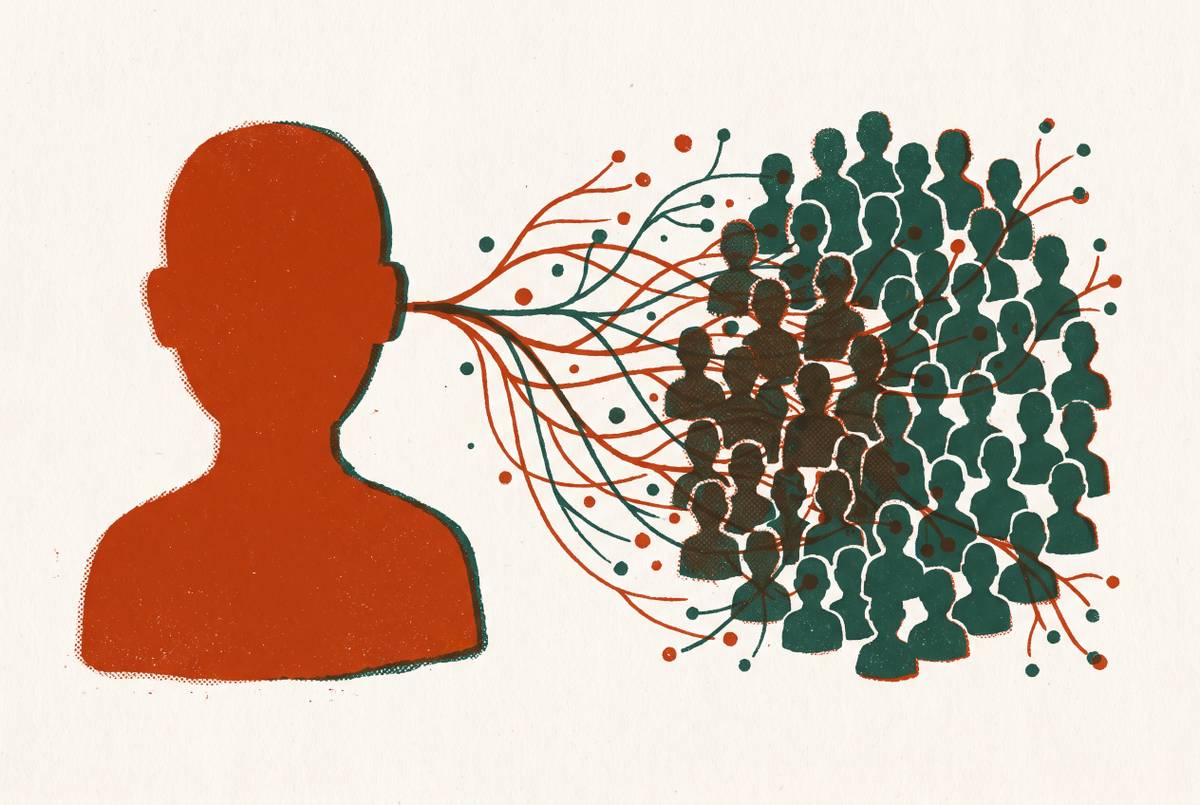
Creator Audience Overlap and Saturation in B2B Niches
Niche B2B creators lose trust value when multiple competitors sponsor them simultaneously.

What audience overlap means in a B2B context, and why it's different from B2C
In consumer marketing, overlap is a math problem. Two influencers with the same followers means duplicated impressions and a slightly worse cost-per-reach number. Annoying, but not fatal.
B2B overlap breaks differently, because the obstacle was never reach. It's trust. When the same procurement directors at target accounts see three competing vendors endorsed by the same LinkedIn voice inside one week, the endorsement stops reading as insight and starts reading as inventory. The creator becomes a media placement, and the trust that made the sponsorship worth buying in the first place evaporates for everyone who bought in after the first vendor did.
The unit worth tracking is ICP-density, not total followers: the share of a creator's audience that actually matches a brand's ideal customer profile. LinkedIn has crossed 1.3 billion members worldwide, which sounds like an ocean of reach until you ask how much of that activity touches any single ICP. Most of what looks like audience size is noise relative to the actual buying committee a brand is trying to move.
And that committee isn't one person. B2B purchase decisions now run through 6 to 10 stakeholders on average, spanning the economic buyer, the technical evaluator, and the end user. Overlap analysis has to account for whether a creator mix covers that whole group.
The mechanics of a crowded creator pond
Saturation doesn't hit a niche all at once. It builds in layers, and the order matters, because it determines which creators still deliver reach into unexposed accounts and which ones have already burned through their credibility.
The first brand to sponsor a respected niche creator gets the full benefit of that creator's trust. The audience reads the endorsement as genuine, since it's the first one they've seen from that voice. The second brand gets less. The third gets less still, because by then the audience has started pattern-matching: sponsored content from this creator now signals that everyone in the category is paying for placement here, and the mechanism that made the endorsement worth anything collapses under its own popularity.
Creators who build real authority in tight niches report receiving multiple collaboration requests at a time, sometimes 3 to 5 per day. That's a small, concrete window into how lopsided the demand-supply math gets once a creator earns real authority in a tight niche. There are only so many voices buyers in a narrow B2B vertical actually trust, and every competitor chasing that vertical is fishing in the same small pond. In ultra-niche categories, the pool of creators whose audience genuinely overlaps with a given ICP can be a handful of names, sometimes fewer.
The pattern mirrors what happens in paid media when a target audience gets exhausted. The most responsive segment converts first and fastest, and once it has converted, or simply seen the message enough times, the return on every additional dollar drops. Creator audiences behave the same way. An audience hit with category messaging from four or five sponsored posts in a month stops responding like a fresh audience, because it isn't one anymore.
Follower count and engagement rate as selection filters in crowded niches
Follower count and aggregate engagement rate are the two metrics most marketers default to, and in a crowded B2B niche, both of them mislead more than they inform.
A creator with a large general business audience can post something that racks up hundreds of likes and dozens of comments, numbers that look great on a campaign recap slide, while delivering almost no impressions that land on an actual ICP account. It's coming from the wrong people. It's just coming from the wrong people.
Campaign data consistently shows that a creator with a smaller but highly engaged audience in a specific vertical will outperform a creator with many times that following, when the product being sold is a niche B2B tool. Size loses to fit, once the audience gets specific enough, and it isn't close.
A trust premium underneath this only holds up under specific conditions. Expert endorsements are 1.7 times more likely to tip a buyer toward one vendor over a competitor, compared to content the company writes about itself, but that multiplier only applies if the endorser actually has standing with that specific buyer. A creator with a huge audience and no real authority in, say, fintech compliance software doesn't earn that multiplier just because the follower count is large. Buyers also ranked being named the top solution by analysts or industry experts as the single most influential trust signal, chosen by 37.9% of B2B buyers, ahead of both video and written customer testimonials. That premium belongs to category-specific authority. It doesn't transfer just because someone built a big platform somewhere else.
Treating audience overlap as a portfolio signal, not a disqualifier
Overlap by itself isn't a red flag. Some amount of shared audience between creators in the same niche is unavoidable, and honestly expected. What matters is how much overlap exists, where it concentrates, and whether it sits on top of the accounts that actually matter.
Overlap data tells a marketer something about the shape of the category's attention. If two creators share a huge chunk of the same ICP audience, the category has one dominant trusted voice that everyone else orbits, rather than several independent pockets of trust. That's market intelligence, not noise to explain away.
The decision rule falls out cleanly enough. High overlap between two creators being considered for the same campaign window is a strong argument for picking one of them, or for sequencing the two activations months apart instead of running them together. Low overlap between two creators who are both ICP-dense means the opposite: the campaign is reaching two different sets of decision-makers, not hitting the same 500 people twice from different angles.
A practical filter sequence for building a low-overlap, high-ICP-density creator mix
Start with vertical, not follower count. Vertical defines the ICP-relevant pool before any overlap math is worth running. A creator with a much larger following who covers business broadly isn't automatically more useful than one with a much smaller following who covers a single vertical, because the vertical is what filters the audience down to people who could plausibly buy the product.
From there, layer in seniority. Match the composition of the creator's audience to the level of the buying committee a given campaign targets: the economic buyer, the technical evaluator, or the end user. A creator whose comment section fills up with individual contributors isn't the right fit for a campaign chasing senior budget owners, no matter how sharp the content is.
Then run a manual content audit covering the past 60 days. Is this creator showing up week over week in the actual conversations target buyers are having? Or is this a generalist who touches the category once a month between posts about something else?
Last, check engagement quality directly. Count the substantive comments coming from named professionals at target accounts. This is where ICP density becomes visible without needing platform-level audience data that most creators won't hand over anyway.
What saturation looks like in categories that are already crowded
A saturated niche shows three symptoms at once. The handful of top-authority creators are already locked into exclusive or semi-exclusive sponsorship arrangements. The cadence of sponsored posts from those same creators has visibly picked up. And the audience has started showing skepticism, meaning engagement on sponsored posts drops relative to the same creator's organic content. If all three are present when a brand checks a niche, the window already closed.
Three real options exist at that point, and none of them rule out the others.
Go narrower. Instead of chasing "SaaS marketing" creators, who by now are picked over, move down into sub-communities like PLG growth or fintech-specific demand gen. Smaller audiences, but lower competitive pressure and often higher ICP density for a specific use case.
Activate the customer tier instead of the creator tier. Existing customers who've built their own LinkedIn following by talking about their actual work carry advocacy that reads as credible, because it is. Competitors can't buy their way into that relationship. The LinkedIn-Ipsos 2025 Influence Report ranks this the second most effective influencer type, cited by 23% of marketers surveyed.
Build instead of rent. Invest in developing emerging creators in the category before the rest of the market notices them. This takes longer to pay off than signing an established name, but it produces lower overlap by definition: a brand that helps shape a creator's audience from the early stage isn't competing for a slot in someone else's already-crowded roster.
Measuring whether your creator mix is reaching different buyers: attribution beyond impressions
Impressions and total reach are the most dangerous numbers to report in an overlapping creator portfolio, because they look strong even when the underlying reach is thin. A campaign can generate a large total impression count while 80% of those impressions land on the same 500 people across every creator in the mix. The topline number hides the exact problem the campaign was supposed to solve.
Measurement standards are shifting in the right direction. 74% of brands now measure creator programs against CAC and ROAS instead of impressions, and that's the correct framing. But it only works if performance gets broken out by individual creator, not rolled up at the campaign level where the overlap stays hidden.
Per-creator attribution is what turns a creator mix into a strategy instead of a guess. Track which creator drove clicks from which specific accounts, which of those clicks turned into leads, and which leads actually entered pipeline. Then, once the campaign runs its course, pull the account lists that engaged with each creator and compare them directly. A large intersection between Creator A's engaged accounts and Creator B's means the overlap never got solved, no matter how good the individual content was. A small intersection confirms the mix is doing its job: reaching more of the buying committee, instead of repeating the same message to the same 500 names sitting in the CRM.