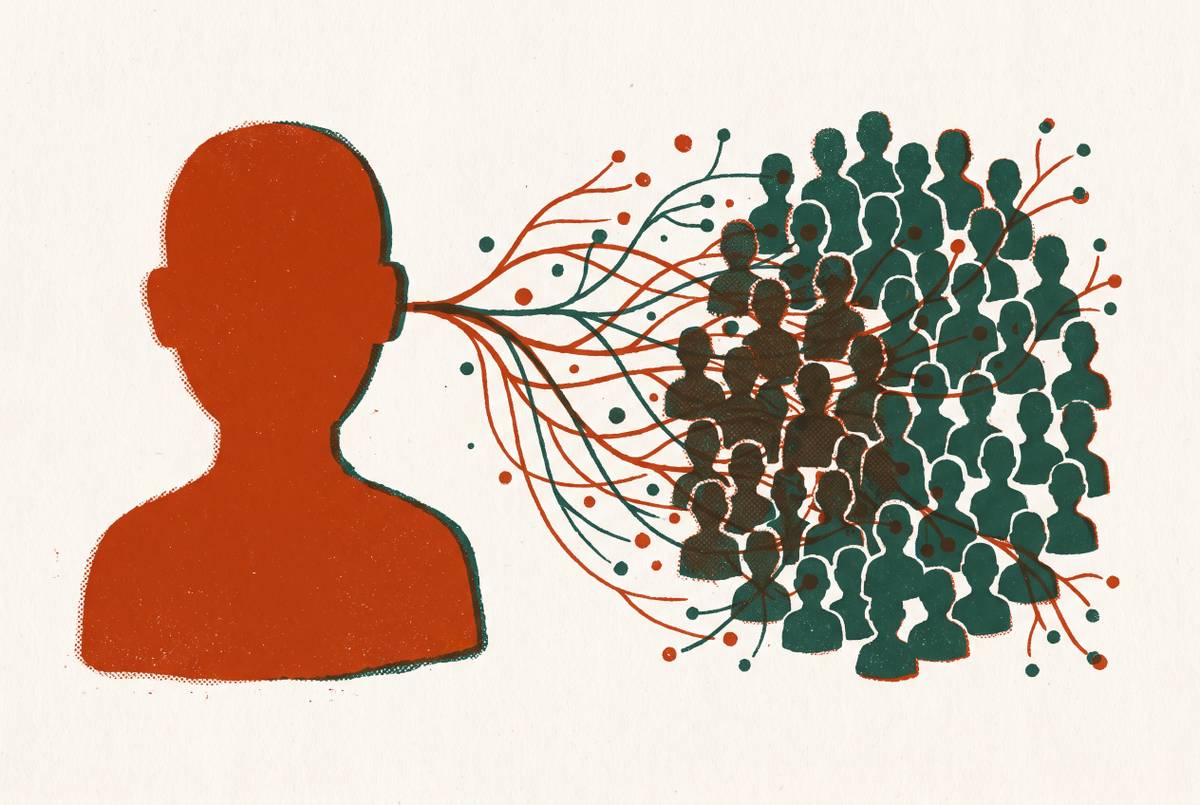
Dark Social Attribution in LinkedIn Creator Campaigns
LinkedIn creator campaigns drive real pipeline that standard analytics can't see.
LinkedIn creator campaigns routinely produce real pipeline, and standard analytics routinely fail to see it. The gap between those two facts is the subject of this piece: why the measurement breaks, what it hides, and how to rebuild a picture of the truth using three layers of signal that work together.
Why LinkedIn creator campaigns look underperforming
Start with the device layer. Roughly half of US B2B mobile traffic runs on iOS, and iOS strips click-ID parameters like gclid and fbclid before the page even loads. Standard UTM parameters generally survive that process, but the click IDs that many tools lean on do not. That single fact changes how a 2026 LinkedIn campaign shows up in a dashboard. A campaign can drive real, countable registrations, and GA4 will still log the majority of them as "(direct)." The campaign didn't fail. The measurement layer simply can't read where the visitor came from.
LinkedIn makes this worse than any consumer platform, because of how its content moves. A creator's post gets forwarded into a Slack channel, pasted into a Microsoft Teams thread, or forwarded over email, and everyone who reads it there never clicks the original post. Each of those readers is a real buying committee member doing real research, and each one lands in analytics as nothing.
Picture the actual path a buyer takes. She reads a creator's LinkedIn posts for a few months. She asks a private Slack group of peers if the product holds up. She finally Googles the company name and books a demo. Analytics records exactly one step in that chain: the Google search. The creator, the months of reading, the peer validation, none of it appears anywhere a marketer can log into and see.
How misattribution triggers the wrong budget decision
Mistake invisibility for failure, and the fix looks obvious: cut the content that isn't converting and move the money to the channel that is. That reallocation is the wrong decision, made by teams that mistake invisibility for failure without tracing how the numbers got there.
Paid LinkedIn campaigns show strong form fills. Creator content, measured the same way, looks weak by comparison. Leadership responds by doubling paid spend. Creator content was warming up prospects inside Slack threads and email chains for weeks, and the paid ad simply captured the last trackable click of a journey the creator started. Stealery's explainer on dark social describes this pattern directly: attribution credited the LinkedIn ad, and dark social did the work. Paid search runs the same trick in a different costume. It captures demand that brand content already created, so it looks efficient. Pour more money into it and pipeline doesn't grow proportionally, because paid search is harvesting intent rather than generating it.
LinkedIn's own attribution window makes the problem structural, not incidental. The platform defaults to a 30-day click window and a 7-day view window. Enterprise B2B deals don't close in 30 days. The Dreamdata LinkedIn Ads B2B Benchmarks Report for 2026, built on tens of millions of sessions and millions of customer journeys, puts the real buying cycle at many months and dozens of touchpoints across multiple stakeholders. A 30-day window catches a sliver of that, and budget decisions built on that sliver are built on a fraction of the real picture.
The missing signal in a B2B buying journey
The traffic hidden by dark social is the peer-validation and committee-research phase of the buying journey, the stretch where vendor preference actually gets formed. Stealery's analysis makes a sharp point about timing: by the time a prospect fills out a demo request form, the decision that the vendor is worth a conversation has already been made. The content that shaped that decision, the peer who was consulted, the comparison that was run against a competitor, none of that is visible anywhere in the CRM.
Think about how a buying committee actually behaves. A procurement manager doesn't post publicly that she found a strong vendor. She forwards the pricing page to her CFO in an email. A sales leader evaluating new tools doesn't tweet about it. He asks his network through a private LinkedIn DM. Every one of those moments is invisible to an attribution model built around trackable clicks, and every one of those moments is where the deal actually gets decided.
Creator content sits especially heavily in this phase. It's top-of-funnel influence that shapes preference long before any measurable intent signal fires, and that timing is why last-click attribution misreads its value so badly. The dark funnel is the wider category here: anonymous site visits, review-site research, podcast listens, community conversations. The private sharing of specific pieces of content is the dark social slice most directly tied to what a creator campaign produces.
Layer one: UTM discipline and branded short links as the baseline
The first layer costs almost nothing and recovers a real share of what's missing: consistent UTM tagging on every creator link, wrapped inside a branded short link that captures the parameters server-side.
The mechanism matters here. A branded short link, something like go.yourdomain.com/creator-name, grabs the original UTM parameters the moment a click happens, before redirect-chain misconfigurations, iOS app-to-browser handoffs, or in-app browser quirks have a chance to drop them client-side. The referral survives even when a device's link-tracking restrictions kick in.
Tagging needs discipline at the creator level, not just the campaign level. A source value of "linkedin" tells a marketer almost nothing. A source value of "creator-firstname-lastname" tells a marketer exactly which creator, and often exactly which post, drove a given conversion. Per-creator landing pages push this further still: a unique URL assigned to each creator attributes a registration to that specific person even in cases where the referrer header gets stripped entirely, catching a few cases that UTM tagging alone will miss.
The failure mode here is common and avoidable. A team builds careful UTM parameters for the first post of a campaign, then lets every post after it go untagged. Or a team uses a generic source value like "social" across every creator, which makes creator-level attribution impossible even on the clicks that do get tracked correctly. This layer sets a floor, not a ceiling. Even if you do UTM tagging perfectly, it only catches traffic that clicks through and keeps its referral data intact on the way, so a large share of dark social stays invisible. That's exactly the gap the next layer is built to close.
Layer two: self-reported attribution as first-party signal
Asking every inbound lead how they heard about the company is a first-party data source in its own right, and it consistently surfaces influence that no tracking tool will ever recover. Analysis of B2B attribution patterns in 2026 finds that self-reported data reveals a substantial share of pipeline originating from channels digital attribution can't see at all: podcasts, private communities, creator content, anything that leaves no click trail.
The implementation is simple on purpose. Put a single field on the demo request form, open text or multi-select, asking "how did you hear about us?" Ask the same question verbally on the first discovery call and log the answer in the CRM as a custom field. This runs parallel to UTM data. It doesn't replace it.
The honest caveat matters here: self-reported data carries a known bias. Buyers tend to recall the most memorable or most recent touchpoint, not necessarily the first one that actually started the journey. That makes the data directionally accurate but not precise. Directionally accurate beats a last-click model that is precisely wrong, and that's the honest case for using it.
The signal gets sharper when a prospect names something specific: a particular creator, a particular post, a particular piece of content. That answer is a high-confidence attribution point no analytics tool could have produced on its own, and it names the exact creator who drove that deal. Cross-reference self-reported source against closed-won CRM data over time, and a pattern emerges: certain creators show up in the "how did you hear about us?" answers of closed deals at rates well above average. That's a creator-level effectiveness signal UTM data alone can't produce.
Layer three: branded search trends as a corroborating signal
A spike in branded search volume after a creator campaign confirms real awareness even when no referral data and no self-reported answer backs it up directly. Follow the logic of the buyer again: she reads a creator's post, talks about the brand in a private Slack channel, then Googles the company name to book a demo. That branded search is the one trackable signal in the entire chain, even though the creator's content drove the whole journey behind it.
Two tools make this visible. Google Search Console shows branded query volume over time. Google Trends shows relative branded search interest on a 0 to 100 scale over time. Overlay campaign dates onto either of those, and you can see the correlation between creator activity and branded search without needing to track a single individual user. Stealery's analysis lists branded search trends as one of three practical proxies for approximating what dark social hides, alongside survey data and UTM tagging.
The shape of the spike tells its own story. A well-run creator campaign typically produces a search spike while posting is active, a second smaller spike as shares circulate through private channels afterward, and then gradual decay. That shape itself is evidence the creator moved awareness, separate from any single trackable click.
In a budget conversation, this layer works as a timeline: the creator campaign ran, branded searches rose, inbound demo requests rose. Present it as correlation, not proof of causation, because the strength of the argument is that the pattern repeats consistently across campaigns rather than showing up once by chance.
Be precise about the limit here too. Branded search can't attribute a specific deal to a specific creator. It's a channel-level signal, not a creator-level one, so it functions as corroboration for the other two layers rather than a replacement for either of them.
Combining the three layers into a defensible attribution picture
No single layer recovers the full dark social picture. Together, the three give you something more accurate than standard analytics, and considerably stronger than asking leadership to trust that creator content is working.
Each layer does a different job. UTM data gives you creator-level click and conversion tracking for the portion of traffic where the referral survives the trip, so it sets a floor, the minimum number attributable to each creator. Self-reported attribution is visible in deals where UTM tracking recorded nothing, including cases where a buyer consumed the content months before converting and the referral chain broke long before the demo was booked. Branded search trends confirm, at the channel level, that the campaign moved real awareness, which validates that the UTM floor and the self-reported figures are plausible.
The output of running all three is a creator campaign report built on three numbers: tracked conversions from the UTM layer, self-reported pipeline influence from the CRM layer, and branded search trend from the awareness layer. Together those three numbers bound the real impact of the campaign from below and from above.
Tracked conversions undercount creator influence because of how LinkedIn handles referrer data, self-reported data and branded search trends both point to a higher real number, and here's the range. That position holds up better than claiming false precision on one hand or shrugging at dark social on the other.
It also changes how creators get chosen for scaling. The creators who show up repeatedly in self-reported "how did you hear about us?" answers, whose campaigns line up with branded search spikes, and whose UTM-tracked conversions run highest are the ones worth investing more in. Audience fit with the actual buyer ICP predicts that pattern. Follower count does not.
Running this attribution stack operationally inside a B2B creator program
None of this gives you useful signal unless you run it consistently, across every creator and every campaign, over time. The operational load of keeping that consistent is the real reason most B2B teams never get the measurement benefit even when they understand the method.
UTM generation is the first place this breaks down at scale. If you run five or more creators at once, manually building unique UTM strings and per-creator landing pages for each one turns error-prone fast. One untagged post is enough to break the floor the whole UTM layer is supposed to provide, and once that floor is broken, the self-reported and branded search layers are left carrying weight they were only ever meant to corroborate, not replace. Building the self-reported question into the CRM as a standing field, checking branded search trends on a fixed schedule, and auditing UTM tagging before every post goes live are the maintenance habits that keep the stack honest. If any one of them is skipped for long enough, the picture it produces becomes as unreliable as the dashboard it was built to fix.